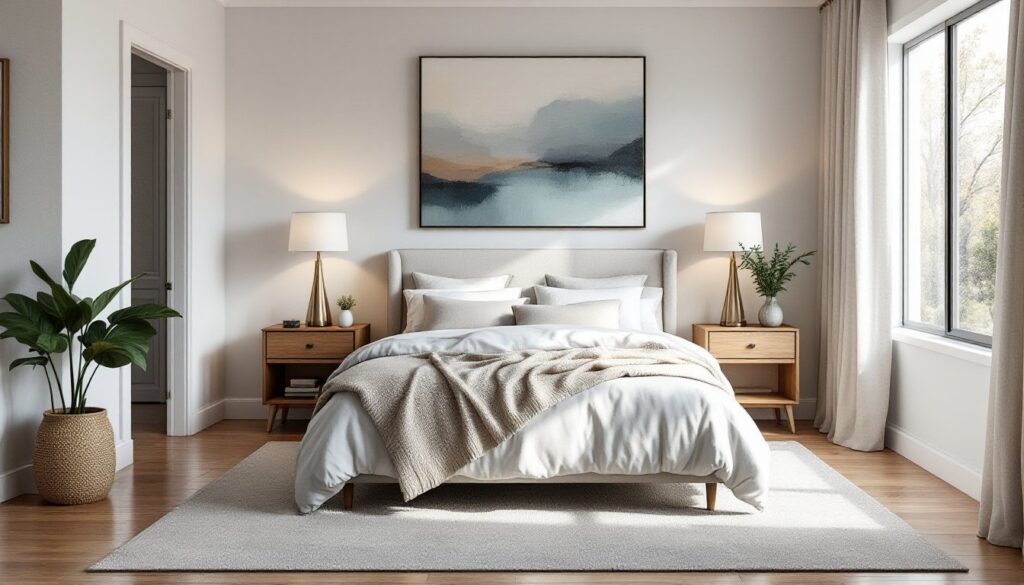
Designing a bedroom isn’t just about tossing a bed against a wall and calling it done. It’s about creating a space that promotes rest, reflects personal style, and functions smoothly day to day. Whether starting from scratch in a new build or refreshing an existing room, a well-designed bedroom balances aesthetics with practicality, lighting that works, furniture that fits, and finishes that don’t clash. Skip the Pinterest mood boards that ignore dimensions and electrical placement. This guide walks through the actual decisions that shape a functional, comfortable bedroom.
Key Takeaways
- Start designing a bedroom by defining its purpose, measuring the room accurately, and sketching a floor plan—skipping these steps leads to costly furniture mistakes and poor layout.
- Use the 60-30-10 color rule (60% dominant, 30% secondary, 10% accent) and test paint samples on multiple walls under different lighting to achieve a cohesive, balanced color palette.
- Layer bedroom lighting with ambient, task, and accent sources, aiming for 10-20 lumens per square foot and using 2700-3000K warm white bulbs to promote relaxation.
- Position your bed with at least 24 inches of clearance on accessible sides, away from windows and overhead lighting, while prioritizing function over perfect symmetry in shared spaces.
- Invest in quality window treatments, bedding, and area rugs with proper padding, then add intentional personal decor in moderation to avoid visual clutter and maintain a peaceful environment.
Start With a Clear Vision and Purpose
Before selecting paint chips or browsing bed frames, define how the space will be used. A primary bedroom for two adults has different requirements than a guest room or a teenager’s retreat. Write down the non-negotiables: adequate storage, workspace, reading nook, or TV placement.
Measure the room accurately, length, width, ceiling height, and locations of windows, doors, electrical outlets, and switches. Note any architectural quirks like angled ceilings, radiators, or built-in features. These measurements dictate furniture scale and layout options.
Consider the room’s orientation. North-facing bedrooms receive cooler, indirect light: south-facing rooms get warm, direct sun. This affects color temperature choices and window treatments. East-facing bedrooms benefit from morning light but may need blackout options for sleep-ins.
Sketch a rough floor plan on graph paper (¼ inch = 1 foot scale works well) or use free digital tools. Mark permanent fixtures first: closets, windows, heating vents. This becomes the foundation for furniture placement and helps avoid costly mistakes like ordering a king bed that won’t clear the doorway.
Choose the Right Color Palette for Your Space
Paint is the most cost-effective way to transform a bedroom, but color choice impacts more than aesthetics. Light colors (whites, soft grays, pastels) reflect natural light and make small rooms feel larger. Darker hues (navy, charcoal, forest green) create coziness but can shrink perceived space if not balanced with adequate lighting.
Test paint samples on at least two walls, one that receives natural light and one that doesn’t. Paint shifts dramatically under different lighting conditions. What looks like a soft beige in the store can read yellow or pink depending on the room’s exposure and lightbulb temperature (more on that later).
For a cohesive look, use the 60-30-10 rule: 60% dominant color (walls), 30% secondary color (upholstery, curtains), 10% accent color (pillows, artwork). This prevents visual chaos. Many interior design strategies rely on this proportion to maintain balance without becoming monotonous.
Ceiling paint matters too. Standard builder white (flat finish) works for most applications, but rooms with high humidity may benefit from satin or semi-gloss to resist moisture. If dealing with textured ceilings, stick with flat, sheen highlights imperfections.
Prep work is critical: Clean walls with TSP (trisodium phosphate) to remove oils and grime. Fill nail holes with spackle, sand smooth when dry, and prime before painting. Skipping primer leads to uneven coverage and color variation, especially when going from dark to light or covering stains.
Plan Your Bedroom Layout and Furniture Placement
Furniture layout determines traffic flow and functionality. Start with the bed, it’s the room’s anchor. Allow at least 24 inches of clearance on each side for easy access and bedmaking. If space is tight, prioritize one side over cramming the bed into the center and leaving narrow, unusable gaps.
Nightstands should be proportional to the bed. Standard bedside tables are 24-28 inches tall (roughly mattress height), but verify against your specific bed frame and mattress depth. A table lamp should sit so the bottom of the shade is at eye level when sitting in bed, typically 20-27 inches from the base to the bottom of the shade.
Dresser placement depends on available wall space and closet adequacy. If the closet is small or nonexistent, the dresser becomes primary storage, plan accordingly. Leave at least 36 inches in front of drawers for comfortable opening and access. Designers at House Beautiful frequently recommend measuring drawer depth fully extended to avoid blocking pathways.
Positioning Your Bed for Maximum Comfort
Bed placement is part practical, part personal preference. The most common configuration centers the bed on the longest wall, ideally opposite the door for visual balance. Avoid placing the headboard directly under a window unless willing to invest in custom window treatments and accept potential drafts.
If the room has only one usable wall for the bed, work with it. Avoid positioning the bed where overhead lighting glares directly into faces or where the door swings into the bed frame. In rooms with sloped ceilings, place the bed under the highest point to avoid a claustrophobic feel.
For shared bedrooms, equal access to both sides is non-negotiable unless one partner genuinely doesn’t care. Don’t sacrifice daily function for symmetry if the room layout doesn’t support it. A well-placed bed that allows one person to exit without climbing over the other beats a centered bed with one inaccessible side.
Layer Lighting for Function and Ambiance
Relying solely on a single overhead fixture creates harsh shadows and limits functionality. Effective bedroom lighting uses three layers: ambient (general illumination), task (reading, dressing), and accent (mood, artwork).
Ambient lighting comes from ceiling fixtures, recessed cans, or semi-flush mounts. A bedroom should have around 1 watt of incandescent lighting per square foot or equivalent lumens for LEDs (roughly 10-20 lumens per square foot). For a 12×14-foot bedroom (168 square feet), aim for 1,680-3,360 lumens total across all light sources.
Task lighting includes bedside lamps, vanity lights, or adjustable sconces. For reading in bed, 40-60 watts (or 450-800 lumens in LED) per lamp prevents eye strain. Swing-arm sconces save nightstand space and provide adjustable positioning. If installing new sconces, place them 48-54 inches from the floor (measured to the center of the fixture).
Accent lighting adds depth: LED strips under floating nightstands, picture lights over artwork, or a statement pendant. Dimmer switches on all lighting circuits offer flexibility, a bedroom needs bright light when getting dressed and soft light when winding down. Most LED bulbs are dimmable, but verify compatibility with existing dimmer switches to avoid buzzing or flickering.
Color temperature affects mood. 2700-3000K (warm white) mimics incandescent bulbs and promotes relaxation. 3500-4100K (neutral white) provides clearer, more energizing light suitable for task areas like closets. Avoid 5000K+ (daylight) in bedrooms unless specifically needed for makeup application, it’s too clinical for rest spaces.
If adding new fixtures requires running wire through walls or ceilings, check local electrical codes. Most jurisdictions require a licensed electrician for anything beyond replacing existing fixtures on the same circuit. That’s not a DIY limitation, it’s a safety and resale issue.
Add Texture and Personality Through Textiles and Decor
Textiles soften hard surfaces and add warmth: bedding, curtains, rugs, throw pillows. They’re also the easiest elements to swap when tastes change. Start with bedding, invest in quality sheets (at least 300-thread-count cotton or linen) and a duvet or comforter that suits the climate. Layering a flat sheet, duvet, and throw blanket adds visual interest and temperature flexibility.
Curtains serve multiple functions: light control, privacy, insulation, and aesthetics. For a polished look, hang rods 4-6 inches above the window frame and extend them 3-6 inches beyond each side to allow panels to clear the glass when open. Curtains should either kiss the floor or puddle slightly, hovering an inch above looks unfinished.
Blackout lining isn’t just for shift workers. It improves sleep quality by blocking streetlights and early sun. Thermal lining adds insulation value, particularly in older homes with single-pane windows. Those following design trends often choose layered window treatments, sheer panels for daytime privacy with heavier drapes for night.
Area rugs define zones and reduce noise, especially in upstairs bedrooms. For a queen bed, an 8×10-foot rug works well with the bed placed so the rug extends 18-24 inches beyond the sides and foot. Alternatively, use runners on each side if the room is narrow. Rug pads prevent slipping and extend rug life, non-negotiable on hardwood or tile.
Wall decor should be intentional. Oversized art (at least two-thirds the width of the furniture below) anchors a space better than scattered small frames. Hang artwork so the center sits at 57-60 inches from the floor (gallery standard). Use a level and measure twice, patching drywall holes is tedious.
Personal touches matter, but clutter doesn’t. A few meaningful items (photos, a favorite print, a plant) add character. Thirty tchotchkes create visual noise. Storage solutions like floating shelves or a bench with hidden compartments keep the room functional without sacrificing style. For those new to this, checking out resources like interior design for beginners can clarify the difference between curated and cluttered.
Safety note: Secure heavy mirrors and artwork with appropriate wall anchors. Drywall alone won’t hold anything over a few pounds, use toggle bolts or find studs with a stud finder. In earthquake-prone areas, use museum putty or wire hanging systems rated for the item’s weight.
Conclusion
A well-designed bedroom balances comfort, function, and personal style without overcomplicating the process. Measure carefully, plan lighting for flexibility, and invest in quality where it counts, paint prep, mattress, and window treatments. The rest can evolve. Trends from sources like MyDomaine and Homedit provide inspiration, but a bedroom that meets daily needs beats one that just photographs well.