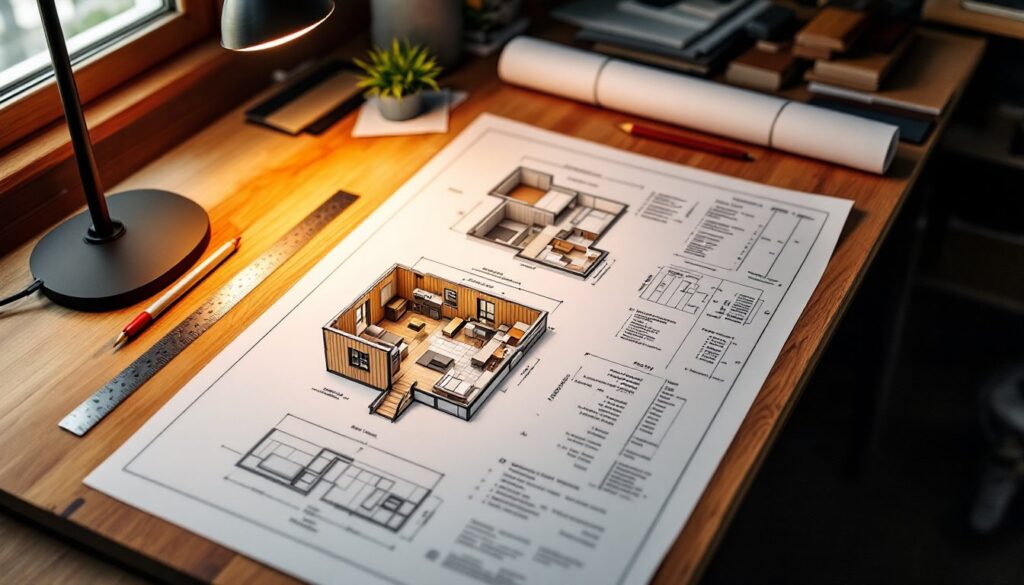
Planning a tiny house isn’t just about downsizing, it’s about maximizing every square inch for livability. A well-designed floor plan determines whether a 200-square-foot space feels cramped or surprisingly functional. Without a solid blueprint, builders often end up with awkward traffic flow, wasted vertical space, or bathrooms that require contortionist skills. Before cutting a single board or ordering a trailer frame, homeowners need design plans that address structural requirements, zoning constraints, and how they’ll actually live day-to-day in a micro-footprint.
Key Takeaways
- Comprehensive tiny house design plans prevent costly structural mistakes, code violations, and awkward floor layouts that compromise livability in limited square footage.
- Essential design elements include accurate dimensions, loft headroom calculations (3–4 feet minimum), egress windows, and weight-bearing wall designations to ensure safety and code compliance.
- Multi-functional built-in furniture like murphy beds, stair-step storage, and bench seating maximize usable floor space in tiny house layouts.
- Vertical space optimization through ceiling-height cabinets, strategic loft placement (3’8″ to 3’10” interior height), and wall-mounted folding desks unlocks hidden storage and functionality.
- Kitchen and bathroom efficiency depends on right-sized appliances (24–36 sq. ft. kitchens, 15–25 sq. ft. bathrooms), proper ventilation placement, and space-saving fixtures like pocket doors and wall-hung sinks.
- Pre-made tiny house design plans should be engineer-stamped and verified for trailer specifications; budget $200–$800 for plans and $500–$1,500 for structural modifications if customization is needed.
Why Tiny House Design Plans Matter Before You Build
Skipping the planning phase on a tiny house build is like framing a wall without measuring, you’ll pay for it later. Design plans force builders to confront real-world constraints: trailer dimensions if building on wheels (typically 8.5 feet wide to stay road-legal), weight distribution for towing, and local building codes that vary wildly by jurisdiction.
Many municipalities classify tiny houses differently depending on whether they’re on a foundation or wheels. A permanent tiny house may need to meet IRC (International Residential Code) minimums for ceiling height (6’8″ in most rooms, 6’4″ in bathrooms), egress windows, and loft guardrails. A THOW (tiny house on wheels) might bypass some codes but face RV park restrictions or parking ordinances. Plans help identify these hurdles before money gets spent.
Detailed plans also serve as communication tools. If hiring contractors for electrical or plumbing rough-in, they’ll need dimensions and fixture locations. If applying for a building permit (required in most areas for permanent foundations), the permitting office needs stamped drawings showing compliance with local setback rules and utility connections.
Finally, plans expose design mistakes early. That 24-inch-wide staircase to the loft? Won’t meet code and feels dangerously steep. The composting toilet placed directly under the kitchen counter? Awkward. Catching these issues on paper costs nothing: fixing them mid-build wastes materials and time.
Essential Elements to Include in Your Tiny House Floor Plan
Every tiny house plan needs a few non-negotiables, regardless of style. Start with accurate dimensions: a standard trailer is 8′ x 20′ or 8.5′ x 24′, but subtract framing thickness (wall studs are actually 3.5″ for 2x4s, not 4″). Interior width on an 8.5′ trailer drops to roughly 7’10” after walls.
Include headroom calculations for lofts. Standing height isn’t necessary, but 3 to 4 feet allows sitting up in bed comfortably. Main floor ceiling height should hit at least 6’8″ per code, though 7′ to 7’6″ feels less claustrophobic.
Mark windows for egress and ventilation. IRC requires at least one egress window with a 5.7-square-foot opening and a 24-inch minimum height. Tiny houses need cross-ventilation to prevent moisture buildup, operable windows on opposite walls work best.
Plan for utilities routing: where do water lines, drain vents, and electrical panels go? A 100-amp service is overkill for most tiny houses: 50 amps handles typical loads, but confirm with an electrician and local NEC (National Electrical Code) amendments.
Designate weight-bearing walls if building on a trailer. The floor joists typically run perpendicular to the trailer frame, so interior walls running parallel to the trailer direction can help support loft loads without transferring all weight to exterior walls.
Multi-Functional Furniture and Storage Solutions
Built-in furniture isn’t optional in tiny house plans, it’s structural. A murphy bed or fold-down table reclaims floor space during the day. Stair treads can double as drawers: many DIY furniture plans show how to integrate storage into stair risers using pocket-hole joinery.
Loft guardrails required by code (36″ minimum height) can incorporate bookshelves or cubbies on the room-facing side. Under-couch storage bins slide out on drawer glides rated for 100 pounds or more.
Bench seating along walls hides hinged storage compartments. Size them to fit standard plastic bins (like 12-gallon totes) so contents stay organized. Frame the bench at counter height (36″) and it can pull double duty as workspace or dining surface.
Popular Tiny House Layout Styles and Configurations
Single-loft designs place the sleeping loft over the bathroom or kitchen, leaving the main floor open for living space. This works well for solo dwellers or couples. The loft typically spans the full 8-foot width of the trailer, with ladder or stair access.
Double-loft layouts create two sleeping areas, one over each end, with a central living zone below. This suits families or rental properties. Traffic flow becomes tighter, so plan a 32-inch minimum pathway down the center to avoid bottlenecks.
Ground-floor bedroom plans skip lofts entirely, trading vertical space for accessibility. Seniors or anyone with mobility concerns benefit. The trade-off: less storage and a smaller living area, since the bedroom consumes 60 to 80 square feet of the main floor.
Studio-style layouts eliminate bedroom walls, using curtains or sliding barn doors for privacy. This maximizes perceived space but offers zero sound isolation, a problem if one occupant works nights.
Gooseneck designs (for fifth-wheel-style trailers) gain an extra 2 to 3 feet of headroom in the bedroom area over the truck bed. This allows a taller loft or raises the bedroom ceiling to full standing height. The gooseneck section usually measures 8′ x 8′, adding about 64 square feet to the total.
Maximizing Vertical Space in Your Tiny House Design
Vertical space is where tiny houses find hidden square footage. Ceiling-height cabinets in the kitchen capture storage that would otherwise go unused. Extend upper cabinets to within 6 inches of the ceiling: yes, you’ll need a step stool, but seasonal items and surplus pantry goods fit perfectly.
Loft height is a balancing act. Lower lofts (around 3’6″ interior height) leave taller main-floor ceilings but force a crawl into bed. Higher lofts (4’+ clearance) allow sitting upright but drop the main living area ceiling below 7 feet, which feels oppressive. Split the difference at about 3’8″ to 3’10”.
Ladder versus stairs is a critical vertical-space decision. Ladders take 18 inches of floor space: alternating-tread stairs need about 30 inches. Stairs are safer and easier to climb at night but consume precious square footage. Ship’s ladders (steep stairs at 55 to 65 degrees) sit between the two, safer than a ladder, narrower than standard stairs.
High shelving and hooks along walls keep bikes, tools, and gear off the floor. Install a wall-mounted folding desk at standing height (42″) for a workspace that disappears when not in use.
Consider a vaulted or shed-roof design instead of a flat ceiling. This adds headroom in the center while maintaining a low profile for towing. The peak can hit 13’6″ (the legal height limit in most states) while the eaves stay at 6’8″, creating usable loft space on both sides.
Kitchen and Bathroom Planning for Small Footprints
A functional tiny house kitchen fits in 24 to 36 square feet if planned correctly. Use a 24-inch-wide apartment-size range or a two-burner cooktop. Full-size ranges (30″) waste counter space. Refrigerators run 18 to 24 inches wide: cubic-foot models (8 to 10 cu. ft.) handle most needs without the bulk of standard units.
Counter depth should hit 25 inches to accommodate a standard sink basin (22″ front-to-back). L-shaped or galley kitchens create work triangles even in tight quarters. Place the sink near a window for natural light and ventilation, grease and steam need an exit path.
Overhead pot racks and magnetic knife strips free up drawer space. Toe-kick drawers (those 4-inch-tall spaces under base cabinets) hold baking sheets and cutting boards. Avoid countertop appliances: a toaster oven and microwave combo unit mounts under cabinets.
Bathrooms shrink to 15 to 25 square feet in most tiny house plans. A 32″ x 32″ shower stall is the practical minimum: anything smaller feels claustrophobic. Corner neo-angle showers save a few inches over rectangular pans.
Toilets vary widely. Composting models (like Nature’s Head or Separett) eliminate black-water tanks and plumbing vents but require regular maintenance. RV-style cassette toilets are compact but need dump-station access. Standard flush toilets work if the house connects to sewer or septic, but the 3-inch drain vent punching through the roof complicates design.
Wall-hung sinks expose floor space, making the bathroom feel larger. A 24-inch vanity with integrated sink provides counter space for toiletries without crowding. Pocket doors save the 18-inch swing clearance a standard door requires, critical in a 5-foot-wide bathroom.
Finding and Customizing Pre-Made Tiny House Plans
Pre-made plans save time and reduce design errors, but few work perfectly out of the box. Builders can find tiny home floor plans showing a range of layouts, from minimalist studios to family-friendly doubles. Many small space living resources provide inspiration for interior layouts and storage hacks that adapt well to tiny house constraints.
When evaluating plans, check whether they’re engineer-stamped. Some jurisdictions won’t issue permits without PE (professional engineer) or architect certification, especially for structural elements like loft load ratings. Trailer-based plans should specify axle capacity and tongue weight, critical for safe towing.
Customization happens at two levels. Cosmetic changes, swapping window sizes, relocating light fixtures, choosing different cabinet styles, usually don’t require plan revisions. Structural modifications, moving walls, changing loft dimensions, altering roof pitch, need recalculation. If making major changes, hire a structural engineer to verify joist sizing and load paths, typically $500 to $1,500.
Some plan sets include material lists with dimensional lumber counts, fastener quantities, and sheathing square footage. This prevents mid-build trips to the lumberyard and helps generate accurate cost estimates. Expect plans to cost $200 to $800 depending on detail level and whether they include mechanical/electrical layouts.
Before purchasing, verify the plan’s trailer specifications match what’s available. Plans drawn for an 8′ x 20′ trailer won’t fit an 8.5′ x 24′ frame without adjustment. Confirm that rough openings for windows and doors align with stock sizes from major suppliers, custom windows blow the budget fast.