Tiny homes pack a lot of living into 400 square feet or less, but that constraint demands smart design choices. Every square inch needs to work harder than it would in a conventional house. The difference between a cramped box and a functional, comfortable tiny home comes down to layout decisions, furniture selection, and storage strategies that most builders overlook. Whether you’re planning a custom build on a trailer or downsizing into a prefab ADU, the design principles are the same: think vertical, make everything multifunctional, and eliminate dead space ruthlessly.
Key Takeaways
- Tiny house design ideas succeed when every square inch serves multiple purposes through smart furniture selection, vertical storage, and efficient layouts that maximize living space.
- Multifunctional furniture like Murphy beds, storage ottomans, and expandable dining tables are essential to eliminate single-purpose pieces and reclaim floor space in compact homes.
- Vertical storage solutions—including floor-to-ceiling shelving, pegboards, and overhead racks—keep items accessible while freeing up walking space on the floor.
- Natural light through strategically placed windows combined with light paint colors, mirrors, and LED strip lighting create the illusion of openness and make tiny homes feel larger.
- Kitchens and bathrooms demand precision planning with apartment-size appliances, corner showers, pocket doors, and wall-mounted fixtures to maintain function without sacrificing comfort.
- Outdoor extensions like fold-down decks, retractable awnings, and screened porches effectively expand your living area and provide relief from confined interior spaces.
Space-Saving Layout Strategies for Tiny Homes
Open floor plans are standard in tiny houses, but how you zone the space matters more than square footage. Avoid hard walls between the living and sleeping areas, use partial dividers, curtains, or furniture placement to define zones without blocking sightlines or airflow.
Loft sleeping areas are popular because they free up floor space below, but headroom matters. Most lofts offer 3 to 3.5 feet of clearance, which works for sleeping but not sitting upright. If you need a workspace or reading nook in bed, a Murphy bed or convertible sofa on the main floor is a better choice.
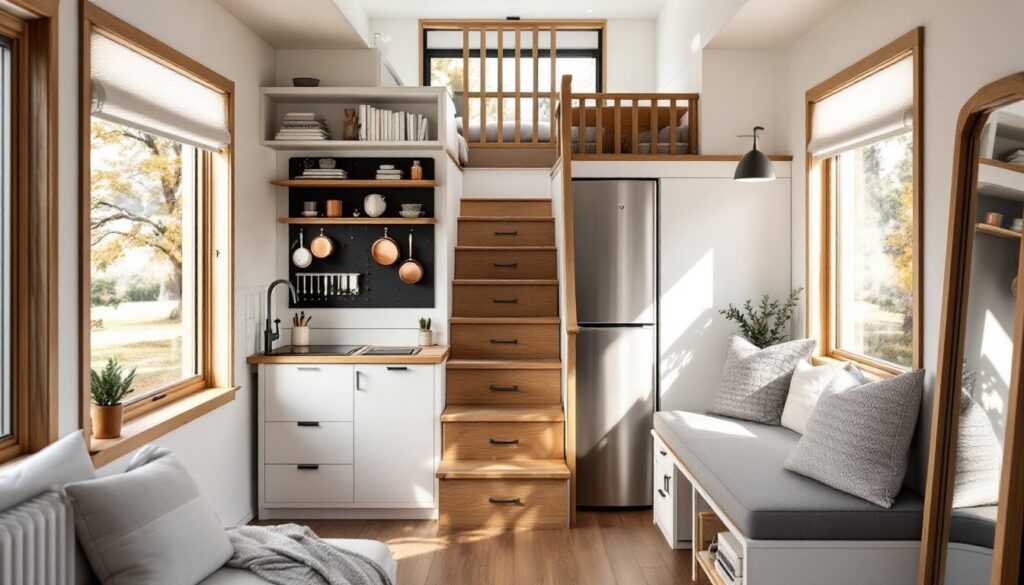
Stairs versus ladders is a real decision point. Stairs with built-in storage drawers (each riser becomes a drawer) take up more floor space but add usable storage and safety. A steep ship’s ladder saves space but isn’t practical for kids, older adults, or middle-of-the-night trips. If you go with a ladder, mount it at a 70-degree angle instead of vertical for easier climbing.
Consider trailer dimensions if you’re building on wheels. Most tiny house trailers are 8.5 feet wide, which means interior width maxes out around 8 feet after framing and siding. Length varies, but anything over 24 feet requires special towing permits in many states. Plan your layout around these constraints before you frame.
Multifunctional Furniture That Works Double Duty
Single-purpose furniture is a luxury tiny homes can’t afford. Every piece should serve at least two functions.
Murphy beds fold vertically into a cabinet or wall and free up floor space during the day. Modern hardware kits (like those from Rockler or Create-A-Bed) make DIY installation manageable if you’re comfortable with a drill and level. Pair them with a fold-down desk or shelving on the cabinet face to maximize utility.
Storage ottomans and benches with lift-up seats provide hidden storage for blankets, tools, or pantry overflow. Build a window seat with storage underneath using 2×4 framing and plywood, it doubles as seating and a catch-all for seasonal gear.
Expandable dining tables are essential. A wall-mounted drop-leaf table takes up six inches when folded, expands to seat four when needed. Alternatively, use a slide-out cutting board or pull-out shelf as a dining surface. Many modern tiny house designs incorporate home organization ideas to manage dining and kitchen zones without permanent furniture.
Convertible sofas that fold into beds work, but test them in person first. Many are uncomfortable for both sitting and sleeping. A quality futon frame with a 6-inch foam mattress often outperforms cheap sofa beds.
Custom-built furniture often fits tiny spaces better than off-the-shelf pieces. A built-in bench along one wall with under-seat storage and a fold-down table is more efficient than separate chairs and a freestanding table.
Vertical Storage Solutions to Maximize Every Inch
Walls are underutilized real estate in tiny homes. Vertical storage pulls items off the floor and keeps them accessible without eating into your walking space.
Floor-to-ceiling shelving installed on any open wall provides storage for books, kitchenware, or folded clothes. Use adjustable shelf brackets so you can reconfigure heights as needs change. Open shelving works in living areas: add cabinet doors in bedrooms to hide clutter.
Pegboards and slatwall panels are workhorses in kitchens, workshops, and mudroom areas. Mount a pegboard behind the stove for utensils, spices, and cookware. A slatwall system in the entryway holds coats, bags, and tools on interchangeable hooks.
Overhead storage racks in the kitchen or bathroom keep items you don’t use daily out of the way. Install a pot rack above the stove or a hanging basket system for produce. In bathrooms, mount a shallow shelf above the door frame for extra toilet paper or towels.
Magnetic strips and hanging bars save drawer space. A magnetic knife strip on the kitchen wall, a hanging bar for pots and pans, and S-hooks on closet rods all keep items visible and accessible. Many small-space advocates, including those featured on Apartment Therapy, recommend magnetic spice jars mounted inside cabinet doors.
Staircase storage (if you have stairs to a loft) should be designed with pull-out drawers, not fixed shelves. Each step can hold 10 to 15 inches of depth, enough for shoes, pantry goods, or tools.
Light and Color Tricks to Make Your Tiny House Feel Bigger
Small spaces feel even smaller when they’re dark or visually cluttered. Strategic lighting and color choices create the illusion of openness.
Natural light is the biggest factor. Maximize window placement during the design phase, south-facing windows bring in the most light year-round. If privacy is a concern, use frosted glass or top-hinged awning windows that open outward.
Light paint colors reflect more light than dark tones. White, off-white, or pale gray on walls and ceilings make rooms feel taller and wider. Save bold colors for accent walls or removable decor, not permanent finishes.
Mirrors placed opposite windows bounce light around the room and create depth. A full-length mirror on a closet door or a mirrored backsplash in the kitchen adds visual space without taking up square footage.
LED strip lighting under cabinets, along loft edges, or behind floating shelves adds ambient light without the bulk of traditional fixtures. Dimmable LEDs let you adjust brightness for different tasks. Recessed lights in the ceiling keep the overhead plane clean and uncluttered, which helps rooms feel taller. Following current interior design trends can help identify color palettes and lighting strategies gaining traction in 2026.
Avoid heavy curtains or dark window treatments. Sheer blinds or light-filtering shades provide privacy while letting daylight through.
Clever Kitchen and Bathroom Design Ideas
Kitchens and bathrooms are the hardest spaces to shrink without sacrificing function. Plan these areas with precision.
Kitchen Layout
Apartment-size appliances (24-inch ranges, 18-inch dishwashers, counter-depth refrigerators) fit tiny kitchens better than full-size models. A two-burner induction cooktop uses less space and energy than a traditional range. Experts at The Kitchn regularly highlight compact appliances that don’t compromise performance.
Pull-out pantry cabinets with narrow vertical storage (6 to 12 inches wide) slide between appliances or at the end of a counter run. They hold spices, canned goods, and baking supplies in a footprint smaller than a standard cabinet.
Corner sinks or undermount prep sinks maximize counter space. A single-basin sink (instead of double) gives you more room for washing large pots. Pair it with a pull-down faucet for flexibility.
Wall-mounted faucets free up counter space behind the sink. They’re common in European kitchens but underused in the U.S. Requires careful plumbing during framing.
Bathroom Layout
Corner showers with neo-angle doors take up less floor space than rectangular alcove showers. A 36×36-inch corner unit is functional for most adults. Skip the tub unless it’s non-negotiable, showers are more space-efficient.
Wall-hung toilets with in-wall tanks (like Geberit systems) save 6 to 9 inches of floor depth compared to standard toilets. They also make floor cleaning easier. Installation requires access behind the wall, so plan during framing.
Pocket doors eliminate door swing in tight bathrooms and hallways. A standard hinged door needs 9 square feet of clearance: a pocket door needs zero. Johnson Hardware and others make DIY-friendly pocket door kits. Just make sure the wall cavity is deep enough (usually 2×6 framing instead of 2×4).
Recessed medicine cabinets built into the wall between studs add storage without protruding into the room. Standard stud spacing (16 inches on center) limits width, but you can frame a wider opening if you plan ahead.
Outdoor Living Extensions for Tiny House Dwellers
Outdoor space effectively expands your living area when weather permits. Treat decks, patios, and porches as additional rooms.
Fold-down decks or patios that attach to the side of a tiny house on wheels create instant outdoor living space. Some designs use hydraulic hinges or manual props to fold flat for travel, then deploy when parked. Check local codes, permanent structures may require permits, even for tiny homes.
Retractable awnings provide shade and weather protection without a permanent roof. Manual or motorized options are available. A 10×10-foot awning extends usable outdoor time by blocking sun and light rain.
Outdoor kitchens don’t have to be elaborate. A simple grill station with a fold-down prep counter and storage underneath keeps cooking smells and heat outside during summer. Run a cold water line if possible, or use a gravity-fed sink with a jug.
Container gardens and vertical planters add greenery without yard space. Wall-mounted planters, railing boxes, or a small raised bed can grow herbs, greens, and compact vegetables. Modern sustainable builders, often profiled on Dwell, integrate edible gardens into tiny house designs as both function and aesthetic.
Screened porches or bug netting around a deck make outdoor living practical in areas with mosquitoes or flies. A DIY screen frame built from 1×2 lumber and fiberglass mesh costs under $100 and attaches with hooks for seasonal removal.
Conclusion
Tiny house living works when design compensates for limited square footage. Prioritize layouts that eliminate wasted space, furniture that adapts to multiple uses, and storage that climbs walls instead of consuming floors. The best tiny homes feel spacious because every decision, from stair design to lighting placement, serves a clear purpose. Start with the layout, build in flexibility, and don’t skip the details that make small spaces livable long-term.