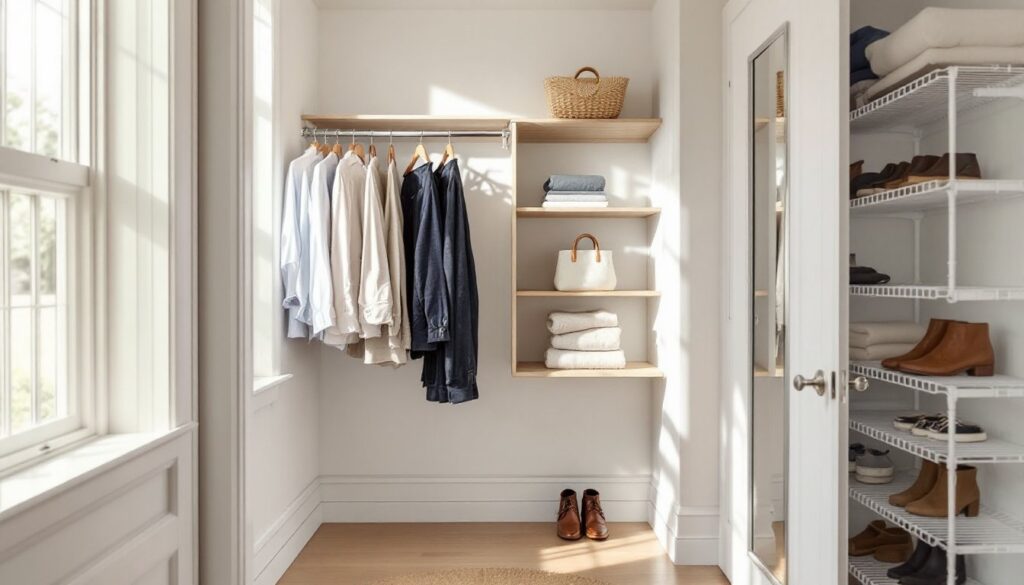
A small walk-in closet doesn’t have to feel cramped or chaotic. With the right design approach, even a 4×6-foot space can deliver serious storage capacity and feel organized. The difference between a closet that works and one that frustrates comes down to three things: smart layout, vertical thinking, and simplicity over clutter. Homeowners often overcomplicate small closets with too many storage gadgets or color choices that shrink the space visually. This guide covers practical strategies for designing a small walk-in that actually functions, without requiring a contractor or blowing the budget.
Key Takeaways
- A simple small walk-in closet design maximizes function by prioritizing smart layout, vertical thinking, and eliminating visual clutter through neutral colors and minimal hardware.
- Double hanging rods at 40-42 inches and 80-84 inches, paired with shelving above, dramatically increase storage capacity without requiring permanent renovations.
- Essential layout strategies vary by closet size: L-shape or U-shape for spaces 5×5 feet or smaller, and parallel or single-wall layouts for rectangular closets like 4×6 feet.
- LED lighting with 50-75 lumens per square foot combined with light neutral paint makes small closets feel larger and improves visibility for daily use.
- DIY components like wire shelving ($60-$100) or wood-and-standard systems ($80-$120) reduce custom closet costs by 50-70%, while adjustable modular systems offer flexibility for renters.
- Avoid common costly mistakes including overbuying organizers before finalizing the core layout, ignoring door swing space, and mounting shelves deeper than 14-16 inches.
Why Simple Design Works Best for Small Walk-In Closets
Small spaces demand restraint. Every shelf, rod, and drawer competes for square footage, so simplicity becomes a functional requirement, not just an aesthetic choice.
In closets under 40 square feet, visual clutter translates directly to physical clutter. A simple color palette, white, light gray, or natural wood tones, keeps sightlines clean and makes the space feel larger. The same logic applies to hardware: matching finishes and minimal brackets reduce visual noise.
Keep the system modular. Wire shelving or adjustable track systems let homeowners reconfigure storage as needs change without tearing out fixed components. Fixed built-ins look polished but lock you into one layout. For renters or anyone who might move, adjustable systems offer more flexibility and typically cost 30–50% less than custom millwork.
Simple doesn’t mean cheap. It means intentional. A single well-placed shelf does more work than three poorly spaced ones. Focus on the essentials: hanging space, folded storage, and shoes. Add specialty storage (tie racks, belt hooks) only after the core layout is dialed in.
Essential Layout Strategies for Compact Walk-In Closets
Layout determines how much a small walk-in can hold. Start by measuring the actual usable wall space, accounting for door swing and walkway clearance.
For spaces 5×5 feet or smaller, an L-shape or U-shape configuration maximizes perimeter storage. Hang rods on two or three walls, leaving a narrow aisle (minimum 24 inches wide) for access. Anything narrower feels like a standard reach-in closet.
For rectangular closets (4×6 feet or 5×7 feet), a single-wall or parallel layout works better. Place hanging rods on the longest wall and shelving on the short end wall. If the closet is wide enough (48 inches or more), consider parallel rods on both long walls with a 30-inch aisle between them.
Door placement matters. If the door opens into the closet, it eats floor space. Swap it for a sliding barn door or remove it entirely if privacy isn’t an issue. Pocket doors are ideal but require wall cavity space during rough-in, not a simple retrofit.
Measure twice before installing anything permanent. Standard closet rods sit 66–68 inches high for long hanging, but in small closets, double rods at 42 inches and 84 inches often yield more total hanging length. Use actual lumber dimensions when building supports: a 1×4 board is actually 3/4″ × 3.5″, and rod brackets need solid backing, ideally into wall studs.
Smart Storage Solutions That Don’t Overwhelm the Space
Small closets need storage that works hard without hogging visual or physical space. Skip the trendy acrylic organizers and focus on systems that scale vertically and adapt to real wardrobe needs.
Shoe storage is a common pain point. Tiered shoe racks or slanted shelves (12 inches deep) hold more pairs per square foot than floor-level piles. Mount them on the lower wall section or inside the door. For households with seasonal shoe rotation strategies, clear bins on upper shelves keep off-season footwear dust-free and accessible.
Drawer units on wheels or freestanding cube organizers offer flexibility. Look for units 24–30 inches tall that fit under hanging clothes. Avoid built-in drawers unless the closet is at least 6 feet wide, they reduce hanging space and cost significantly more.
Use the back of the door. Over-the-door hooks (rated for at least 5 pounds each) handle bags, belts, or tomorrow’s outfit. Avoid overstuffing: a door loaded with 20 pounds of gear will sag and stress the hinges.
Corner space often goes to waste in small walk-ins. Corner shelves (triangular or lazy Susan-style) make that dead zone functional for folded sweaters or accessories. Install them 12–18 inches apart for stable stacks.
Vertical Storage and Double Hanging Rods
Vertical space is the biggest underused asset in small closets. Most homeowners hang a single rod at 66 inches and call it done, leaving 18–24 inches of wall above it empty.
Double rods are the simplest vertical upgrade. Mount the top rod at 80–84 inches (standard ceiling height is 96 inches) and the lower rod at 40–42 inches. This setup works for shirts, pants, skirts, and folded-over trousers. Long dresses and coats need a dedicated single-rod section, allocate 12–18 inches of rod length for those.
Shelving above the rods holds bins, luggage, or seasonal items. Install shelves 12–16 inches apart for folded clothes: deeper spacing works for bulky items like comforters. Use solid wood or plywood shelves (3/4-inch thick) rather than particleboard, which sags under weight. A 36-inch span can hold about 50 pounds on 3/4-inch plywood: longer spans need center supports.
Wall-mounted track systems (like Elfa or ClosetMaid) simplify vertical builds. Tracks attach to studs, and brackets clip in at any height. No need to commit to fixed spacing during install. For renters, some systems use tension poles instead of wall anchors, stability is lower, but damage is zero.
Wear safety glasses when drilling into drywall or studs. Dust and debris will fall, especially overhead.
Color and Lighting Tricks to Make Your Closet Feel Larger
Paint and light have outsized impact in tight spaces. A poorly lit closet in a dark color feels like a cave, no matter how well organized.
Stick with white or light neutral paint on walls and ceilings. Flat or eggshell finish hides imperfections better than gloss, but satin is easier to wipe down if the closet sees heavy use. One gallon of paint typically covers 350–400 square feet: a small closet uses less than a quart for two coats.
If the closet lacks natural light (most do), add overhead LED fixtures. A flush-mount LED (800–1,000 lumens, 3000K–4000K color temperature) provides bright, neutral light without the yellow tint of incandescent bulbs. Battery-powered LED puck lights work for renters or retrofit situations, mount them under shelves or above rods with adhesive strips.
Motion-sensor lights are convenient but not essential. A standard wall switch just outside the door is cheaper and more reliable. If running electrical, follow NEC guidelines for bedroom/closet circuits and use junction boxes rated for the fixture weight. Electrical work may require a permit depending on local codes: check with the building department before running new wiring.
Mirrors expand the perceived size of a closet, but only if there’s room. A full-length mirror (12×48 inches) mounted on the back of the door or on a narrow wall section works. Avoid mirrored closet doors in walk-ins under 5×5 feet, they reflect clutter and make the space feel busy.
DIY-Friendly Organization Systems for Budget-Conscious Homeowners
Custom closet systems from big-box stores run $500–$2,000 installed for a small walk-in. DIY kits and off-the-shelf components cut that cost by 50–70%.
Wire shelving kits (ClosetMaid, Rubbermaid) are the easiest entry point. A typical 4-foot section with shelves and rods costs $60–$100. Installation requires a level, drill, and stud finder. Wire shelves won’t sag, but small items (scarves, socks) can slip through. Add shelf liners if needed.
For a cleaner look, build wood shelving using 3/4-inch plywood or primed MDF. Cut shelves to width (10–16 inches deep for closets), then mount them on metal standards (also called pilasters) screwed into studs. This system adjusts vertically like track systems but costs less, around $80–$120 for materials in a 5×5 closet. Use a circular saw or table saw for straight cuts: a miter saw isn’t necessary for shelving.
Closet rods come in wood, metal, or coated wire. Metal rods (1 1/4-inch diameter) support the most weight, up to 80 pounds over a 4-foot span with proper brackets. Mount brackets into studs or use heavy-duty drywall anchors rated for at least 50 pounds each. A sagging rod is almost always a bracket problem, not a rod problem.
Many budget-friendly organization projects use tension rods for temporary dividers or secondary hanging. They’re fine for lightweight scarves or tank tops but won’t hold a winter coat collection.
Wear work gloves when handling cut plywood or metal shelving, edges are sharp. Use a dust mask if cutting MDF: the dust is fine and irritating.
Common Mistakes to Avoid in Small Walk-In Closet Design
Small closets punish design mistakes fast. Here are the errors that cost the most time, money, or function.
Overbuying storage accessories. Bins, baskets, drawer dividers, none of it matters if the core layout doesn’t work. Design the hanging and shelving first, then add organizers to fill specific gaps.
Ignoring the door swing. A standard inward-swinging door takes up 8–10 square feet when open. That’s nearly 20% of a 5×5 closet. Swap for a slider or pocket door if possible, or just remove the door.
Mounting shelves too deep. Shelves deeper than 16 inches in a small closet block access to items in back and visually crowd the space. Stick with 12–14 inches for most applications.
Skipping stud anchoring. Drywall anchors work for lightweight picture frames, not loaded shelves. Always locate studs (typically 16 inches on center) and fasten heavy brackets or standards directly into them. A stud finder costs $15–$25 and prevents repairs later.
Choosing fixed systems in rental properties. Screw holes and paint aren’t landlord-friendly. Tension systems, freestanding units, and removable adhesive hooks preserve deposit money.
Underestimating lighting needs. A single 60-watt bulb isn’t enough. Small closets need 50–75 lumens per square foot for good visibility. A 25-square-foot closet should have 1,250–1,875 lumens total, which translates to one or two modern LED fixtures.
Finally, don’t skip the planning phase. Measure the space, sketch the layout on graph paper, and mock up shelf heights with painter’s tape on the wall before drilling. Most decluttering and layout strategies emphasize this prep work for good reason, it’s faster to adjust a pencil line than to patch and repaint drywall.