Designing a kid’s bedroom is more than picking a paint color and tossing in a bed. It’s about building a functional space that adapts as they grow from toddler tantrums to teenage assignments marathons. A well-planned room balances storage, play areas, and sleep zones without feeling cramped or chaotic. Whether you’re converting a spare room or refreshing an outdated space, smart design choices now save you from constant overhauls later. This guide walks through the practical decisions that make a kids bedroom work harder and last longer.
Key Takeaways
- A functional kids bedroom layout starts with measuring the room and mapping fixed elements, then prioritizing bed placement away from windows with at least 30 inches of traffic clearance for safety and movement.
- Use neutral base colors and layer in accent colors through removable decor like bedding and wallpaper to create a kids bedroom design that adapts as your child grows without constant repainting.
- Vertical storage solutions—floating shelves, closet double rods, rolling carts, and underbed bins—maximize space and keep toys, clothes, and school supplies organized without overwhelming small rooms.
- Invest in durable, age-appropriate furniture like full-size beds and solid wood construction, and always anchor tall pieces to wall studs to prevent dangerous tip-overs that send thousands of children to emergency rooms annually.
- Create distinct sleep, play, and study zones using visual boundaries like rugs, bookcases, or different wall colors so kids can mentally shift between activities and parents can supervise effectively.
- Involve kids in decorating with DIY projects and removable decals to build ownership while keeping costs low and allowing changes as their interests evolve.
Planning Your Kids Bedroom Layout for Function and Fun
Start by measuring the room and mapping out fixed elements: windows, doors, closets, and electrical outlets. Use graph paper or a free floor planning app to sketch furniture placement before moving anything heavy. Kids bedrooms typically range from 100 to 150 square feet, so every inch counts.
Prioritize the bed location first. Place it against the longest uninterrupted wall, away from windows (prevents drafts and keeps curtain cords out of reach). Avoid putting the headboard under a window, temperature fluctuations mess with sleep, and it’s harder to make the bed.
Next, identify high-traffic paths. Kids move fast and rarely look where they’re going. Leave at least 30 inches of clearance between furniture edges for walking lanes. If the room has two entry points (door and closet), keep that path obstacle-free.
Consider sightlines from the doorway. Parents need to see into the room quickly for safety checks, and kids want to show off their space. Position play areas or display shelves within view, but keep the sleeping zone slightly separated if the room allows.
If space is tight, think vertical. Loft beds free up floor area underneath for desks or storage cubbies. Just confirm ceiling height, most loft beds need at least 7 feet of clearance from the top bunk rail to the ceiling for safety and air circulation.
Choosing a Color Scheme That Grows With Your Child
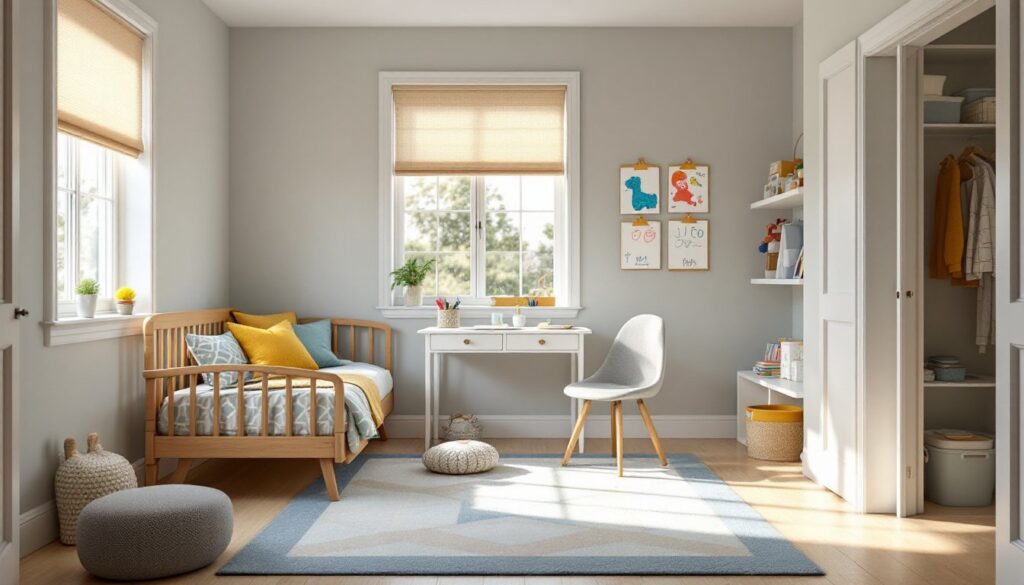
Skip the cartoon character walls unless you’re ready to repaint in two years. Base your palette on neutral or adaptable tones, grays, soft whites, warm beiges, or muted greens, then layer in accent colors through bedding, rugs, and removable decor.
Paint coverage averages 350-400 square feet per gallon for quality interior latex. A standard kids bedroom (10×12 feet with 8-foot ceilings) typically needs one gallon for two coats, assuming minimal texture.
If your child insists on bold color, use it strategically. Paint one accent wall in their favorite shade or apply peel-and-stick wallpaper that removes cleanly later. This gives them ownership without locking you into a theme that expires with their interests.
Choose washable or scrubbable paint finishes. Satin or eggshell sheens handle frequent cleaning better than flat paint and don’t glare like semi-gloss. Kids’ walls take hits from toy cars, crayon experiments, and sticky fingers.
Test paint samples on at least two walls before committing. Colors shift dramatically depending on natural light direction. North-facing rooms skew cooler: south-facing rooms amplify warmth. Let samples sit for 48 hours and check them at different times of day.
Smart Storage Solutions for Toys, Clothes, and School Supplies
Storage makes or breaks a kids bedroom. Without designated spots for stuff, even the best design turns into a landmine field. Build storage into the layout from the start, not as an afterthought.
Use vertical wall space. Floating shelves installed at 48-54 inches from the floor keep books and display items visible but out of the destruction zone for younger kids. Anchor them into wall studs with appropriate hardware, drywall anchors alone won’t hold up when a kid decides to hang from the shelf.
Closet systems beat standalone dressers for space efficiency. Install double rods at 30 inches and 60 inches to maximize hanging space for small clothes. Add shelf dividers or fabric bins on upper shelves for out-of-season items or keepsakes.
For toys, open bins work better than toy boxes with lids. Kids see what’s inside and actually put things away. Label bins with pictures for pre-readers and words for older children. Rolling storage carts tuck under beds or into closets and pull out easily for play.
School supply zones need drawer organizers or desktop caddies. Dedicate one drawer to art supplies, another to assignments essentials. Many home styling guides recommend clear containers so kids find what they need without dumping everything out.
Don’t overlook underbed storage. Low-profile bins on casters slide under most beds and hold seasonal clothes, extra bedding, or bulky items like sporting equipment. Measure clearance first, standard bed frames offer 6-12 inches of space.
Selecting Age-Appropriate Furniture and Bedding
Buy furniture that serves multiple ages when possible. A full-size bed costs more upfront than a toddler bed but lasts through high school. Standard full mattresses measure 54×75 inches, big enough for sleepovers and growth spurts without overwhelming smaller rooms.
Avoid furniture with sharp corners or unstable bases. Kids climb, jump, and use furniture in ways manufacturers never intended. Anchor tall dressers, bookcases, and wardrobes to wall studs with anti-tip brackets, this isn’t optional. According to the Consumer Product Safety Commission, tip-over incidents send thousands of kids to emergency rooms annually.
Choose solid wood or quality composite construction over particleboard. Kids abuse furniture. Cheaper materials split, sag, or collapse under normal use. Check drawer glides, metal ball-bearing slides outlast plastic and handle repeated slamming.
For toddlers and young children, keep bed height low. Mattress tops should sit no higher than 24 inches from the floor to minimize injury risk from falls. Guardrails help until around age five, but they’re not required for standard beds.
Bedding should be simple and washable. Skip elaborate comforters with dry-clean-only labels. Cotton or cotton-blend sheets in twin or full sizes go through the wash weekly without fading. Buy two sets so you’re never stuck waiting for laundry.
Creating Dedicated Zones for Sleep, Play, and Study
Define separate zones even in small rooms. Visual or physical boundaries help kids mentally shift between activities, playtime versus assignments versus bedtime.
The sleep zone needs darkness and quiet. Use blackout curtains or cellular shades to block streetlights and early sunrise. Position the bed away from shared walls with noisy spaces like kitchens or laundry rooms if possible. A small white noise machine helps drown out household sounds.
The play zone should have durable flooring. If the room has carpet, add a washable area rug that defines the space and protects against spills. Keep this area away from the closet door so kids can access clothes without stepping on toys. Many furniture guides suggest low open shelving here so cleanup is visible and manageable.
For the study zone, natural light matters. Place the desk near a window but not directly in front of it, glare on screens and paper causes eye strain. The desk surface should sit at 24-30 inches from the floor depending on chair height and the child’s size. Adjustable desk chairs grow with them and support better posture than static stools.
If the room can’t physically separate zones, use rugs, bookcases, or even different wall colors to create visual breaks. A room divider or curtain works for shared bedrooms where siblings need distinct territories.
Adding Personal Touches With DIY Decor and Wall Art
Let kids participate in decorating without giving them free rein to chaos. DIY projects build ownership and keep costs down while allowing creative freedom within guardrails.
Gallery walls showcase their artwork without permanent damage. Use clipboards, magnetic strips, or picture ledges that swap out easily as their skills and interests evolve. Space frames or clips 6-8 inches apart for a cohesive look.
Peel-and-stick decals, washi tape borders, and removable wallpaper let kids personalize without long-term commitment. These products have improved dramatically, many now remove cleanly even after years. Test a small corner first if you’re using them on textured walls.
Name signs, height charts, or custom shelving add character. A simple 1×6 pine board ($8-12 for an 8-foot length at most home centers) cut to size and painted becomes a personalized shelf. Sand edges smooth and apply two coats of paint or stain. Mount with L-brackets into studs for items heavier than picture frames.
Create a DIY pegboard organizer for accessories, headbands, or small collections. 1/4-inch pegboard panels cost around $15 for a 2×4-foot sheet. Paint it to match the room, then mount it on 1-inch spacers so hooks fit properly. This project takes about two hours including drying time.
Encourage them to pick throw pillows, bedding patterns, or curtain colors. These swap out inexpensively as tastes change. Involving kids in decor trends decisions teaches them about design choices without expensive mistakes.
Conclusion
A well-designed kids bedroom adapts to changing needs without requiring total overhauls every few years. Focus on flexible layouts, durable materials, and storage that grows with them. Choose neutral base colors, involve kids in removable decor decisions, and prioritize function over fleeting trends. The best rooms balance safety, independence, and personality, spaces where kids feel ownership but parents don’t cringe at the sight of crayon marks.