A high-end kitchen isn’t just about buying the most expensive appliances and hoping for the best. It’s about intentional design, premium materials that age gracefully, and thoughtful details that make daily use feel effortless. Whether you’re planning a full renovation or upgrading key elements, understanding what separates a luxury kitchen from a standard one helps you allocate budget where it counts. This guide breaks down the materials, appliances, layouts, lighting, and finishing touches that define high-end kitchen design, and how to execute them without compromising function for flash.
Key Takeaways
- High-end kitchen design balances premium materials, functional layout, and quality finishes rather than relying solely on expensive appliances to create lasting luxury.
- Custom cabinetry with plywood construction, solid countertops (quartz, granite, or natural stone), and integrated appliances are hallmarks of luxury kitchen design that handle daily wear gracefully.
- Strategic layout with 42–48 inches of counter clearance, dedicated work zones, and thoughtful storage organization makes a greater impact on function than expensive finishes alone.
- Layered lighting—combining ambient, task, and accent lighting with dimmer switches—transforms a kitchen’s visual appeal and usability far more effectively than standard overhead fixtures.
- Professional installation of structural changes, plumbing, gas lines, and electrical work is essential; DIY mistakes in these areas compromise both safety and resale value.
- Finishing touches like quality hardware, proper caulking, and attention to detail separate professionally executed kitchens from average renovations.
What Defines a High-End Kitchen?
A high-end kitchen balances aesthetics with durability and performance. It’s not just about visual impact, it’s built to handle daily use without showing wear, and it makes cooking, cleaning, and entertaining more efficient.
Key markers include custom or semi-custom cabinetry with dovetail joints and soft-close hardware, solid surface countertops (quartz, granite, or natural stone), and integrated or paneled appliances that blend into the design. High-end kitchens also feature quality finishes, think brushed brass hardware, under-cabinet lighting, and full-extension drawer slides.
Layout matters as much as materials. A luxury kitchen often includes a dedicated prep zone, separate cleanup area, and ample storage designed around how the space is actually used. If the layout forces you to zigzag between the fridge and stove, no amount of marble will fix it.
Structurally, high-end kitchens may involve load-bearing wall removal or reconfigured plumbing and electrical, both of which typically require permits and licensed contractors. Don’t skip this step. A beautifully tiled backsplash won’t help if the gas line wasn’t installed to code.
Premium Materials That Make a Statement
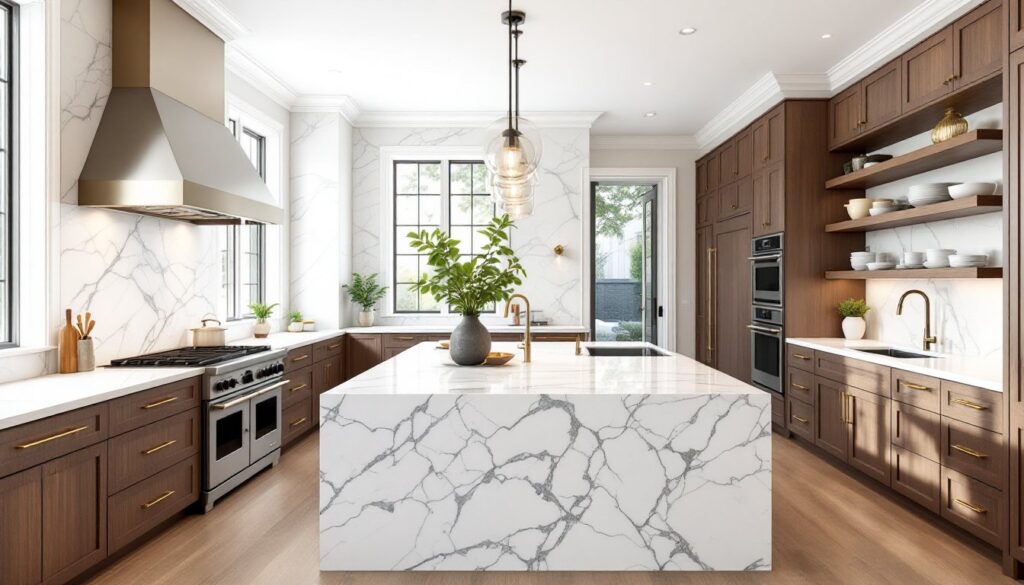
Material choices set the tone for a luxury kitchen. Start with countertops: quartz offers consistent patterning and low maintenance, while natural stone like Carrara or Calacatta marble delivers veining and character that can’t be replicated. Granite remains durable and heat-resistant, ideal for heavy-use zones. Expect 3 cm (1.25-inch) thick slabs for a substantial look.
Cabinetry should be plywood or solid wood construction, avoid particleboard cores. Full-overlay doors (where the door covers the cabinet frame) give a cleaner, modern look. Inset doors (set into the frame) offer a traditional, furniture-grade finish but cost more due to tighter tolerances. Popular wood species include walnut, white oak, and quarter-sawn cherry.
Backsplashes are where you can introduce texture and contrast. Subway tile is classic, but consider large-format porcelain slabs, zellige tile with handmade variation, or book-matched marble for dramatic veining continuity. Whatever you choose, plan for a wet saw and tile nippers, corners and outlets require precise cuts.
Flooring needs to handle spills and foot traffic. Engineered hardwood (not solid, which can warp near sinks) works well, as does large-format porcelain tile that mimics stone. Natural stone tile is beautiful but requires sealing and can be cold underfoot. If budget allows, radiant floor heating adds comfort and resale value.
Don’t overlook hardware. Solid brass or stainless steel pulls and knobs feel substantial and won’t tarnish like cheaper alloys. Budget $8–$25 per pull for quality hardware.
Luxury Appliances and Smart Technology
High-end appliances combine performance, durability, and design. Look for panel-ready models that accept custom cabinet fronts, so your dishwasher and refrigerator blend seamlessly.
For ranges, dual-fuel models (gas cooktop, electric oven) offer precise heat control and even baking. A 36-inch range with at least five burners and a convection oven is standard in luxury kitchens. If space and budget allow, a separate wall oven and cooktop provide flexibility.
Refrigeration options include built-in column units (separate fridge and freezer) or French-door models with customizable temperature zones. Built-ins sit flush with cabinetry for a streamlined look but require adequate ventilation clearance per the manufacturer’s specs.
Ventilation is critical and often overlooked. A range hood should move at least 300–600 CFM (cubic feet per minute) depending on cooktop output. Ducted hoods vent outside: recirculating hoods filter and return air but are less effective. If your range is on an island, plan for a downdraft vent or a suspended hood, which requires structural support and framing.
Smart technology adds convenience: Wi-Fi-enabled ovens you can preheat remotely, refrigerators with interior cameras, and induction cooktops with precise temperature control. Many high-end models integrate with voice assistants. Just be realistic, these features add cost and complexity, and not everyone needs them.
Installation often requires professional help, especially for gas lines (which need a licensed plumber in most jurisdictions) and dedicated 240V circuits for ranges and wall ovens. Don’t DIY this part.
Layout and Space Planning for Maximum Impact
Good layout makes the difference between a kitchen that looks expensive and one that works like it. Start with the work triangle, the path between sink, stove, and fridge, but don’t treat it as gospel. Modern kitchens often include multiple work zones: prep, cooking, cleanup, and storage.
For luxury kitchens, aim for 42–48 inches of clearance between opposing counters or islands. This allows two people to work comfortably and provides space for appliance doors to open fully. Islands should be at least 4 feet long and 2 feet deep to be functional: anything smaller just eats floor space.
If you’re adding an island, check whether it requires additional support. Islands with overhangs for seating need corbels or posts to support the cantilevered countertop, especially with heavy materials like stone. Overhangs of 12 inches or more typically need structural support per IRC guidelines.
Storage should be planned around use. Deep drawers for pots and pans, pull-out shelves for small appliances, and dedicated slots for cutting boards and baking sheets all make daily tasks easier. Corner cabinets benefit from lazy Susans or pull-out organizers, otherwise they become black holes.
If your design involves moving plumbing or gas lines, expect permitting and inspections. Same goes for removing walls. Even non-load-bearing walls often house electrical or HVAC that needs rerouting. Hire a structural engineer if you’re unsure.
Examples from opulent kitchen galleries show how thoughtful layout elevates even modest square footage.
Lighting Design That Transforms Your Kitchen
Lighting is where many DIYers stumble, they install overhead cans and call it done. A high-end kitchen layers ambient, task, and accent lighting to create depth and function.
Ambient lighting provides overall illumination. Recessed cans work, but consider a flush-mount or semi-flush ceiling fixture for style. Recessed lights should be 4–6 inches from the wall and spaced about 4 feet apart for even coverage. Use LED retrofits rated for damp locations near sinks.
Task lighting targets work surfaces. Under-cabinet LED strips or puck lights eliminate shadows on countertops. Install them toward the front of the cabinet (not the back) to minimize glare on glossy backsplashes. Hardwired is cleaner than plug-in, but requires fishing wire through cabinets, doable with a flex bit and patience.
Accent lighting highlights features. In-cabinet lighting for glass-front doors, toe-kick LEDs for a modern glow, or pendant lights over an island add visual interest. Pendants should hang 30–36 inches above the counter to avoid head-bumping.
Dimmer switches are non-negotiable. They let you adjust mood and save energy. Make sure your dimmers are compatible with LED bulbs, older models cause flickering.
Color temperature matters. Kitchens benefit from 3000–4000K bulbs (warm to neutral white). Avoid the blue-tinged 5000K+ unless you’re performing surgery.
Electrical work beyond swapping fixtures typically requires a licensed electrician and permits, especially if you’re adding circuits or relocating switches. NEC requires GFCI protection for countertop outlets within 6 feet of a sink.
High-End Details and Finishing Touches
Details separate a good kitchen from a great one. Start with hardware: solid brass, unlacquered finishes develop a patina over time: brushed nickel or stainless resist fingerprints. Install hardware centered on drawers and at a consistent height on doors, typically 2.5 inches from the bottom edge on uppers and top edge on lowers.
Crown molding adds a custom look to cabinetry. It’s easier to install if cabinets don’t go to the ceiling, just secure blocking to the wall, then nail molding to it. If cabinets are ceiling-height, you’ll need to scribe molding to fit irregularities in the ceiling plane. A coping saw and patience help.
Open shelving can work in high-end kitchens if done intentionally, not as a budget shortcut. Use solid wood or metal brackets rated for the load (dishes are heavy). Shelves should be at least 1.5 inches thick to avoid sagging.
Consider a pot filler faucet near the range, it’s a luxury touch that actually saves steps when cooking pasta or stock. Installation requires running a water line, which means opening walls and likely hiring a plumber.
Faucets should be solid brass or stainless construction with ceramic disc valves (not compression). Pull-down or pull-out spray heads add flexibility. Touchless models are convenient but require a power source under the sink.
Keeping up with emerging design resources can help refine your choices as trends evolve. Inspiration from high-end kitchen examples shows how restraint and material quality outweigh over-styling.
Finally, don’t rush the finish work. Caulk seams where backsplash meets countertop with 100% silicone (not acrylic latex, which yellows). Touch up paint nicks. Clean grout haze with a pH-neutral cleaner. These small steps make the difference between a professional look and a DIY tell.
Conclusion
High-end kitchen design isn’t about following a checklist, it’s about making intentional choices that align form, function, and durability. Focus on quality materials, smart layout, and layered lighting first. Then add the details that make the space yours. If a task involves structural changes, plumbing, gas, or electrical beyond your skill level, hire a pro. The goal is a kitchen that performs as well as it looks, year after year.