French kitchen design isn’t just a trend, it’s a timeless approach that marries function with refined elegance. Whether you’re drawn to the rustic charm of Provence or the polished sophistication of a Parisian apartment, the French aesthetic offers warmth, character, and a lived-in feel that mass-produced kitchens can’t replicate. The good news? You don’t need to gut your kitchen or hire a contractor to capture that je ne sais quoi. With intentional material choices, thoughtful layouts, and a few key design moves, you can transform your space into something that feels both effortlessly chic and genuinely practical.
Key Takeaways
- French kitchen design merges refined elegance with functional warmth through intentional material choices, creating spaces that feel lived-in rather than showroom-perfect.
- Anchor your kitchen with signature elements like apron-front sinks, open shelving with natural wood, and custom range hoods to capture authentic French Country or Classical aesthetics.
- Soft, earthy color palettes—off-whites, muted blues, natural wood tones, and terracotta—define French kitchens and should be paired with chalky, matte paint finishes rather than glossy lacquers.
- Select natural, tactile materials such as marble, soapstone, butcher block counters, and handmade ceramic tiles to build character and authenticity that synthetics cannot replicate.
- Layer warm ambient, task, and accent lighting with candelabra bulbs and dimmers to create the inviting glow characteristic of French kitchen design.
- Prioritize displaying working tools and fresh ingredients—copper pots, herbs in terracotta pots, and linen textiles—to embrace the proudly functional, social nature of a French kitchen.
What Defines French Kitchen Design?
French kitchen design pulls from two distinct traditions: French Country (think rural farmhouses in Provence) and French Classical (the refined elegance of Parisian townhouses). Both share a reverence for natural materials, handcrafted details, and a lived-in quality that prizes patina over perfection.
Country kitchens lean rustic. Expect rough-hewn beams, stone or terracotta floors, open shelving displaying everyday dishes, and cabinetry with visible wood grain or distressed paint finishes. The vibe is warm, informal, and approachable.
Classical French kitchens, by contrast, skew formal. Cabinetry is often painted in soft neutrals with raised panel doors and ornate hardware. Marble countertops, brass or nickel fixtures, and symmetrical layouts are hallmarks. The aesthetic is restrained but luxurious.
Both styles reject minimalism. French kitchens embrace clutter, the good kind. Cookware hangs from pot racks, mixing bowls sit out on counters, fresh herbs in ceramic pots line windowsills. It’s a working kitchen, not a showroom.
Essential Elements of a French Country Kitchen
Certain features anchor French country kitchens and signal authenticity. Here’s what matters:
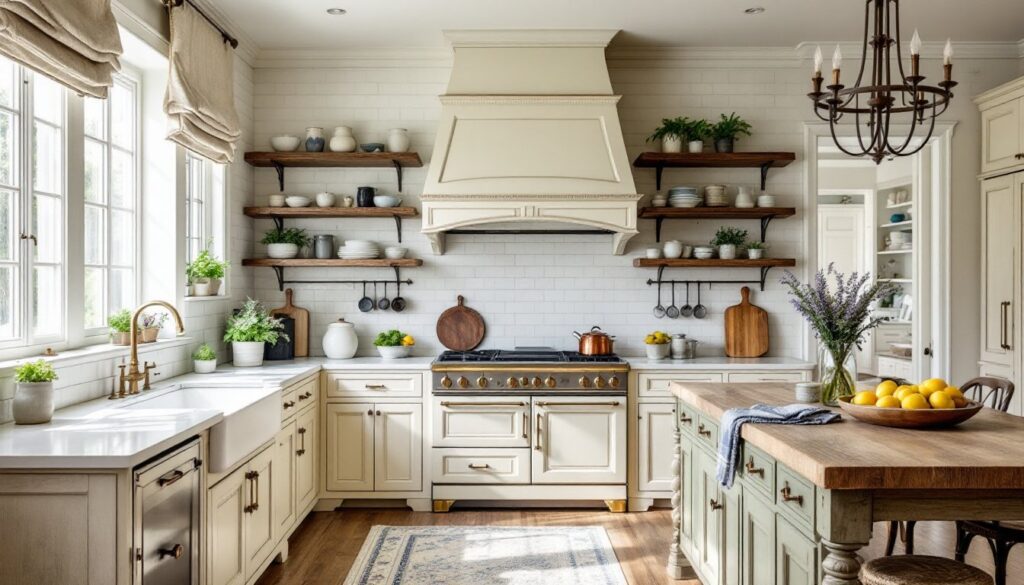
Open Shelving: Swap upper cabinets for sturdy wood or wrought-iron brackets supporting thick shelves. Use 1×12 or 1×10 pine or reclaimed barn wood for warmth. Display everyday dishware, glass storage jars, and copper pots.
Apron-Front Sinks: Also called farmhouse sinks, these deep basins, typically fireclay or porcelain, extend past the counter edge. They’re workhorses for serious cooking and visual anchors for the space.
Range Hood as Focal Point: Forget stainless steel inserts. A custom plaster or stone hood over the range, often arched or corbelled, becomes the kitchen’s centerpiece. DIYers with masonry skills can form one using metal lath, mortar, and skim-coat plaster: otherwise, hire a plasterer or mason.
Butcher Block or Stone Counters: Marble and soapstone are traditional, but butcher block (maple or walnut, 1½” to 2″ thick) offers warmth and is more forgiving on tools and budgets. Seal wood surfaces with food-grade mineral oil or a hardwax finish every few months.
Vintage or Vintage-Style Lighting: Wrought-iron chandeliers, pendant lights with aged brass or black metal, and sconces with fabric shades all fit. Avoid ultra-modern LED strips or chrome fixtures, they clash with the aesthetic.
Color Palettes That Capture French Kitchen Charm
French kitchens favor soft, earthy tones inspired by the countryside and aged architecture. Hard whites and saturated brights feel out of place.
Classic Neutrals: Off-whites, creams, warm grays, and beiges dominate. For cabinetry, Benjamin Moore’s White Dove or Farrow & Ball’s Pointing are go-tos. These shades have enough warmth to avoid sterility.
Muted Blues and Greens: Think faded sky blue, dusty sage, or soft celadon, colors you’d find on weathered shutters. Use these on island bases or lower cabinets for contrast against cream uppers.
Natural Wood Tones: Medium to dark stains on ceiling beams, open shelving, or butcher block counters add depth. Oak, walnut, and reclaimed chestnut all work.
Warm Terracotta and Clay: Introduce these through floor tile, pottery, or painted accents. Terra cotta hex tiles (6″ or 8″ across flats) laid with wide grout joints deliver instant Provençal warmth.
Paint finishes matter. French kitchens often showcase chalky, matte surfaces rather than high-gloss lacquers. Milk paint or chalk-style paint (Annie Sloan, Rust-Oleum Chalked) creates the right low-sheen, hand-done look on cabinets. Sand edges lightly after painting to mimic natural wear.
Materials and Finishes for Authentic French Style
Material choices make or break the French kitchen aesthetic. Opt for natural, tactile surfaces over synthetics.
Cabinetry: Solid wood is ideal, poplar, oak, or pine, with inset or raised panel doors. If budget is tight, plywood box construction with solid wood face frames and hardwood doors works. Avoid flat-slab, frameless Euro-style cabinets: they read modern, not French.
Hardware should be unlacquered brass, oil-rubbed bronze, or wrought iron. Bin pulls, cup pulls, and simple knobs feel more authentic than ornate crystal or polished chrome. Let brass patina naturally over time.
Countertops: Marble (Carrara or Calacatta) is traditional but porous and prone to staining, seal it with a penetrating sealer annually. Soapstone is softer, darkens with mineral oil, and develops character. Butcher block is practical and warm but requires maintenance. Avoid laminate or solid-surface materials like Corian: they lack soul.
Flooring: Terracotta tiles, natural stone (limestone, travertine), or wide-plank wood floors are all appropriate. For tile, choose 12″×12″ or larger formats in matte finishes. If installing over existing subfloor, ensure it’s flat and rated for tile (min. ¾” plywood or cement board underlayment). Grout lines should be 3/16″ to ½” wide, wider joints look more handmade.
Backsplashes: Handmade ceramic subway tiles (3″×6″), small-format mosaics, or natural stone in running bond or herringbone patterns all work. Avoid glass or metallic tiles.
Furniture and Layout Considerations
French kitchens blur the line between cooking and living space. Furniture plays a bigger role than built-ins.
Freestanding Pieces: A vintage hutch, sideboard, or baker’s rack for storing linens, serving ware, or pantry staples adds character and flexibility. Look for solid wood pieces with patina, flea markets and estate sales are gold mines. Refinish if needed, but don’t strip all the age off.
Kitchen Islands: If space allows, a freestanding table or island, ideally wood with turned legs, anchors the room. Top it with butcher block or stone. Avoid rolling islands with chrome frames: they’re too industrial.
Seating: Incorporate a small dining table or banquette if layout permits. Windsor chairs, rush-seat ladder-backs, or upholstered benches fit the style. French kitchens are social spaces, not just cook zones.
Layout: French kitchens aren’t obsessed with the work triangle. Prioritize natural flow and room for multiple people. If renovating, consider placing the sink under a window, range against an interior wall with the hood as a focal point, and refrigeration tucked into cabinetry or a freestanding armoire-style unit.
Structural changes (moving plumbing, gas lines, or load-bearing walls) require permits and often a licensed plumber or electrician. Always check local codes before opening walls.
Lighting and Decorative Touches
Lighting in French kitchens is layered, warm, and never harsh.
Ambient Lighting: A central wrought-iron chandelier or lantern-style pendant sets the tone. Look for fixtures with candelabra bulbs (40W to 60W equivalent LED) in warm white (2700K). Dimmer switches are essential, French kitchens glow, they don’t glare.
Task Lighting: Under-cabinet lights can work if they’re discreet. Use warm LED tape or puck lights (2700K), hidden behind trim or inside glass-front cabinets. Avoid cool-toned LEDs, they kill the mood.
Accent Lighting: Sconces flanking a range hood or open shelving add depth. Choose fixtures with fabric shades, aged metal, or glass chimneys.
Decorative Touches: French kitchens celebrate the tools and ingredients of cooking. Hang copper pots on a pot rack (ceiling-mounted or wall-mounted wrought iron). Display cutting boards, wooden spoons, and classic French kitchen accessories like enamelware and pottery.
Fresh herbs in terracotta pots, a bowl of lemons, linen dish towels on hooks, and open storage for oils and vinegars all contribute to the lived-in aesthetic. Don’t hide everything, French kitchens are proudly functional.
Textiles: Linen cafe curtains, a striped or floral runner, and cloth napkins in muted tones soften hard surfaces. Choose natural fibers (linen, cotton) over synthetics.
Conclusion
French kitchen design rewards attention to detail and a willingness to embrace imperfection. It’s not about replicating a magazine spread, it’s about creating a space that feels warm, inviting, and genuinely used. Start with one or two anchor elements, an apron-front sink, open shelving, or a custom range hood, and build from there. Whether you’re renovating or refreshing, the key is choosing materials and finishes that age gracefully and reflect how you actually cook and live.