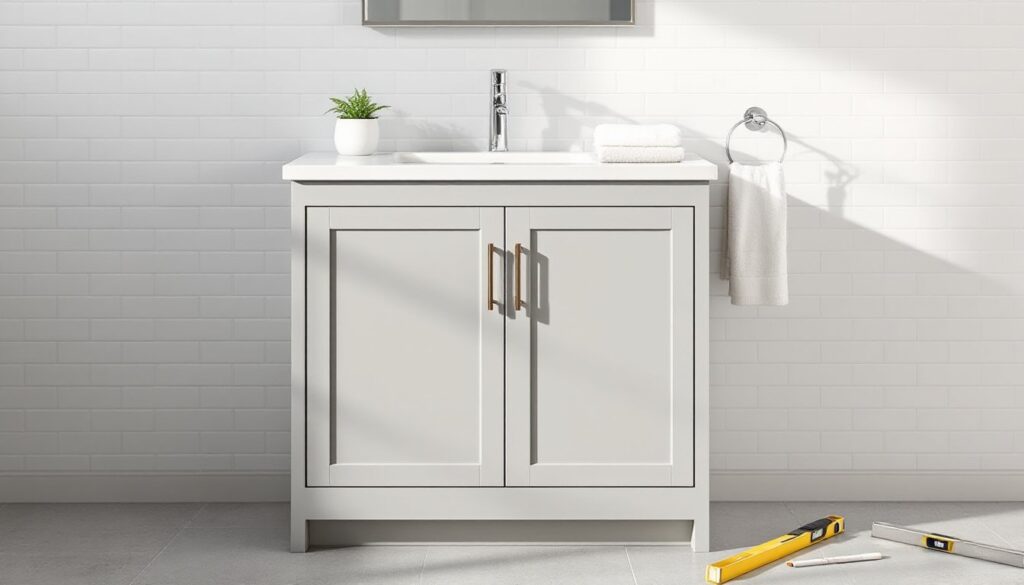
A bathroom cabinet remodel can completely change how a space looks and functions without the cost or mess of a full gut job. Whether the finish is chipped, the hinges are shot, or the layout just doesn’t work anymore, upgrading cabinets delivers one of the highest visual impacts for the effort involved. This guide walks through the planning, material selection, installation decisions, and step-by-step process to remodel bathroom cabinets, from budget-friendly facelifts to full replacements. Expect honest talk about what a DIYer can tackle versus when to call in help, plus the mistakes that trip up most first-timers.
Key Takeaways
- A bathroom cabinet remodel delivers high visual impact without the cost or disruption of a full renovation, solving both functional storage issues and aesthetic outdatedness.
- Plywood construction and water-resistant finishes are essential for bathroom cabinets exposed to humidity, while particleboard should be avoided despite its lower upfront cost.
- DIY bathroom cabinet installation is achievable for straightforward swaps in the same footprint, but hiring a professional is recommended when plumbing must be moved or structural work is involved.
- Proper leveling with shims, securing cabinets to studs with at least two screws, and allowing adequate cure time for paint or finishes prevent common failures that compromise durability and appearance.
- Budget realistically for a bathroom cabinet remodel: expect $200–$800 for stock vanities, $800–$2,500 for semi-custom options, and $2,500+ for custom or high-end units, plus countertop and labor costs.
- Cost-effective alternatives like repainting, hardware swaps, or replacing only door fronts can extend cabinet life for years before a full replacement becomes necessary.
Why Remodel Your Bathroom Cabinets?
Bathroom cabinets take a beating. Humidity warps particleboard, steam lifts veneer, and constant use wears out drawer slides and hinges. Beyond wear and tear, outdated cabinet styles, think builder-grade oak from the ’90s, drag down an otherwise updated bathroom.
A cabinet remodel solves functional problems too. Shallow shelves waste space under the sink, fixed shelving can’t accommodate tall bottles, and poorly placed dividers make drawers useless. Swapping or reconfiguring cabinets improves storage, accessibility, and workflow.
From a value standpoint, updated cabinets signal “well-maintained home” to buyers. While a cabinet refresh won’t return dollar-for-dollar like a kitchen remodel might, it prevents a bathroom from feeling stuck in the past. And for homeowners staying put, the daily experience of a well-organized, good-looking vanity is worth the effort.
Timing matters. If plumbing, flooring, or electrical work is already planned, coordinate the cabinet work to avoid tearing out new tile or moving supply lines twice. Cabinet remodels also pair well with lighting and mirror upgrades, since everything’s already uninstalled.
Planning Your Bathroom Cabinet Remodel
Start by measuring the existing footprint: width, depth, and height from floor to countertop. Note the locations of supply lines, drain, and electrical outlets. Standard vanity height is 30–32 inches, but comfort height (34–36 inches) is easier on the back and increasingly common. If changing height, expect to adjust plumbing and possibly relocate outlets to meet code.
Decide whether to keep the existing layout or reconfigure. Moving a vanity requires relocating drain and supply lines, doable for a capable DIYer with PEX or copper experience, but it’s also where mistakes get expensive. If walls are involved (adding a linen cabinet, for example), check whether they’re load-bearing. Bathroom walls rarely are, but always verify before cutting studs.
Draft a simple floor plan showing cabinet dimensions, door swing clearance, and any new storage. Include drawer depths and shelf spacing. This isn’t about fancy renderings, graph paper and a pencil work fine. The goal is to catch conflicts (like a drawer that hits the toilet or a door that blocks the tub) before materials are ordered.
Budget realistically. Costs vary wildly by region and material grade, but expect $200–$800 for a basic stock vanity, $800–$2,500 for semi-custom, and $2,500+ for custom or high-end ready-to-assemble (RTA). Add countertop, faucet, labor (if hiring out), and a 10–15% contingency for the inevitable “while we’re at it” additions. Use online cost estimators to get a rough range for local pricing.
Permits depend on scope. Replacing a vanity in the same footprint usually doesn’t require one. Adding new plumbing, moving walls, or upgrading electrical does. Check local building department requirements before starting.
Choosing the Right Cabinet Style and Materials
Cabinet construction boils down to plywood, MDF (medium-density fiberboard), or particleboard for the box, and solid wood, MDF, or thermofoil for doors and face frames. Plywood resists moisture better than particleboard and holds screws more reliably, critical in a humid bathroom. Avoid particleboard-core cabinets unless budget is the only concern: they swell and fail when wet.
Solid wood doors (maple, oak, cherry) offer durability and can be sanded and refinished, but they expand and contract with humidity. MDF doors take paint beautifully and stay flat, making them ideal for painted finishes. Thermofoil (vinyl-wrapped MDF) is budget-friendly and wipes clean, but heat and moisture can cause the film to peel over time.
For bathroom cabinet ideas design, consider how the style integrates with the rest of the space. Shaker-style doors remain the most versatile, working in both traditional and modern settings. Flat-panel (slab) doors suit contemporary or minimalist designs. Recessed-panel or beadboard doors lean traditional. Color trends shift, but white, gray, and natural wood tones age well. Bold colors work if the homeowner is committed, but resale can be tougher.
Hardware matters more than most realize. Soft-close hinges and full-extension drawer slides are worth the upcharge, they prevent slamming and make the back of deep drawers accessible. Undermount slides are smoother and cleaner-looking than side-mount. For drawer boxes, dovetail or dowel joints outlast stapled corners.
Water-resistant finishes are essential. If painting, use a bonding primer and a semi-gloss or satin latex or hybrid enamel topcoat. These finishes resist moisture and wipe clean. For stained wood, apply a water-based polyurethane for durability without yellowing. Many homeowners look at painted bathroom cabinets galleries for color and finish inspiration before committing.
DIY vs. Professional Installation: What’s Right for You?
Installing a vanity is within reach for most DIYers if the new unit fits the same footprint and no plumbing modifications are needed. Skills required: measuring accurately, leveling, driving screws into studs, and connecting compression fittings or PEX supply lines. A torpedo level, stud finder, and adjustable wrench cover most of the tool needs. Expect 4–6 hours for a straightforward swap.
Hire a pro if:
- Plumbing must be moved or repiped. Mistakes here mean water damage and expensive callbacks.
- Walls need structural work (removing a load-bearing section, adding blocking for wall-mount cabinets).
- Custom cabinetry is involved. Installers know how to scribe, shim, and fine-tune tolerances.
- Time or skill is limited. A seasoned installer knocks out a vanity swap in 2–3 hours and warranties the work.
If going DIY, recruit help. Vanities are awkward and heavy, 60–100 pounds for a 36-inch unit, more with a stone top. Two people make leveling and securing to studs far easier.
For partial DIY, consider a hybrid approach: hire a plumber to rough in new supply and drain lines, then handle the cabinet install and finishing yourself. This splits the risk and keeps costs reasonable.
Step-by-Step Guide to Remodeling Your Bathroom Cabinets
Materials and Tools Needed
Materials:
- New vanity cabinet and countertop
- Shims (cedar or composite)
- Wood screws (#8 × 2½-inch for stud mounting)
- Silicone caulk (clear or color-matched)
- Supply lines (braided stainless or PEX)
- P-trap and drain assembly (if replacing)
Tools:
- Torpedo level and 4-foot level
- Stud finder
- Drill/driver with bits
- Adjustable wrench and basin wrench
- Utility knife
- Safety glasses and work gloves
- Pry bar (for removing old cabinet)
- Bucket and rags (for water cleanup)
Step 1: Remove the Old Cabinet
Shut off water at the angle stops under the sink. Open the faucet to relieve pressure, then disconnect supply lines with an adjustable wrench. Place a bucket under the P-trap, loosen the slip nuts, and remove the trap. If the old cabinet is caulked to the wall or floor, score the caulk with a utility knife before prying. Remove screws securing the cabinet to studs and lift it out. Patch any wall damage with spackle or drywall compound and let dry.
Step 2: Check and Prep the Area
Inspect the floor for rot or soft spots, especially near old leaks. Replace any damaged subfloor before proceeding. Locate studs and mark them with painter’s tape. Verify that supply and drain lines are positioned to fit the new cabinet layout. If not, this is the time to call a plumber.
Step 3: Position and Level the New Cabinet
Slide the new cabinet into place (without the countertop for now). Use shims under the base to level front-to-back and side-to-side. Check with a 4-foot level on top edges and front face. Bathrooms floors are rarely perfectly level, so shimming is normal. Once level, mark the stud locations on the inside cabinet back or side.
Step 4: Secure the Cabinet
Drill pilot holes through the cabinet back rail or hanging strips and drive #8 × 2½-inch screws into studs. Use at least two screws per stud for a 36-inch vanity, more for wider units. Double-check level after securing, tightening screws can shift the cabinet. Trim shims flush with a utility knife.
Step 5: Install Countertop and Plumbing
Set the countertop on the cabinet. Some tops (like cultured marble) come predrilled with integrated bowls: others require a separate undermount or drop-in sink. Run a bead of silicone along the top edge of the cabinet before setting the countertop to prevent water infiltration. Install the faucet and drain assembly per manufacturer instructions, this is easier before the top is secured. Connect supply lines to angle stops (hand-tight plus a quarter turn with a wrench) and P-trap to the drain stub-out. Turn on water and check for leaks. Tighten connections as needed.
Step 6: Caulk and Finish
Apply a neat bead of silicone caulk where the countertop meets the wall and along any seams. Smooth with a wet finger or caulk tool. Attach cabinet hardware (pulls, knobs) and adjust door/drawer alignment with hinge and slide screws. Reinstall or replace the mirror and any wall-mounted accessories.
Budget-Friendly Tips for Cabinet Makeovers
Not ready to replace the whole cabinet? A reface or refinish can buy years of life. Paint transforms outdated wood cabinets, sand lightly with 120-grit paper, apply a bonding primer, and finish with two coats of semi-gloss paint. Swap hardware for an instant update: modern pulls and knobs run $3–$10 each. Replace just the doors and drawer fronts if the cabinet box is sound, RTA door suppliers sell by size. Add rollout trays or drawer organizers to improve function without changing the footprint. For design inspiration and budgeting, sites like Remodelista offer curated remodel ideas and product sourcebooks. These cosmetic upgrades cost a fraction of full replacement and can be done over a weekend.
Common Mistakes to Avoid During Your Remodel
Skipping measurements. Measure twice, order once. A vanity that’s even ½-inch too wide won’t fit between walls, and returns are a hassle. Account for baseboard and trim thickness.
Ignoring plumbing placement. New cabinets may have different internal layouts. Verify that supply lines and drain align with openings in the cabinet back. Drill access holes if needed, and don’t assume they’ll match the old setup.
Choosing particleboard in a humid space. It’s cheaper upfront but swells and disintegrates with moisture exposure. Spend a bit more for plywood construction.
Forgetting ventilation. Even with a great exhaust fan, wipe down cabinets after steamy showers. Moisture trapped inside cabinets leads to mold and finish failure.
Over-tightening plumbing connections. Compression fittings and plastic P-traps crack easily. Hand-tight plus a quarter turn is usually enough. Use a basin wrench for hard-to-reach nuts.
Skipping shims. An unlevel cabinet stresses joints, causes doors to sag, and makes drawers bind. Always shim and level before securing.
Rushing the finish. If painting or staining, allow proper cure time between coats and before heavy use. Most paints need 48–72 hours to fully harden, even if they feel dry to the touch.
Not planning for toe-kick height. Standard toe-kick is 3–4 inches tall. If the new vanity has a different kick height than the old one, you may see an unpainted or unfloored gap at the base. Plan to trim or touch up as needed.
A bathroom cabinet remodel is one of the most satisfying projects a homeowner can take on, visible results, manageable scope, and a daily reminder that the effort was worth it. Whether refinishing existing cabinets or installing new ones, careful planning and attention to detail make the difference between a finish that lasts years and one that disappoints. Take the time to measure, level, and seal properly, and the cabinets will look sharp and function smoothly for the long haul.