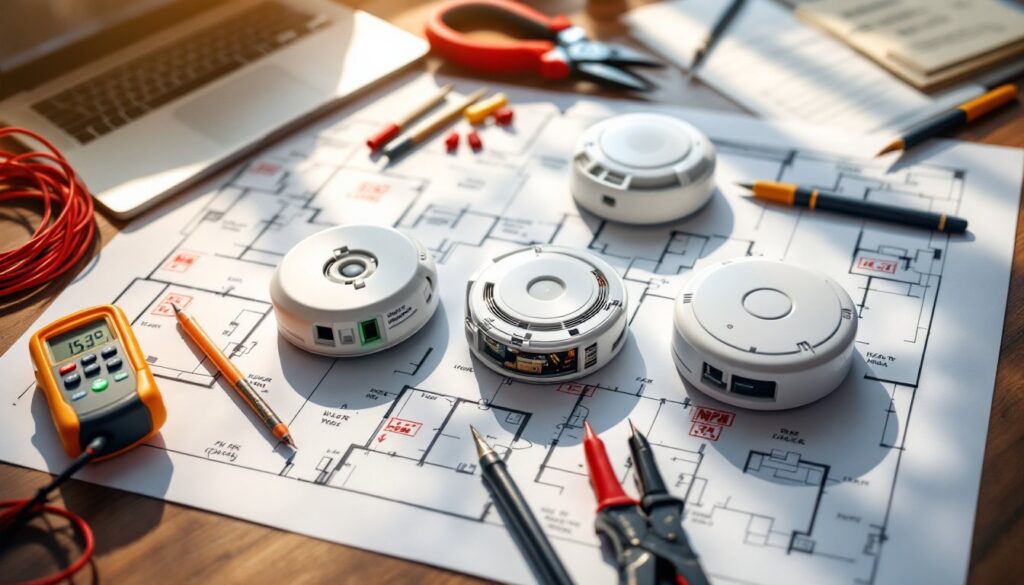
A properly designed fire alarm system isn’t just about compliance, it’s about seconds. When smoke fills a hallway, those extra moments of early detection can mean the difference between a controlled evacuation and a tragedy. Yet most homeowners treat fire alarms like an afterthought, slapping up a couple of battery-powered units wherever they happen to have a stepladder handy. Whether you’re building new construction, upgrading an outdated system, or finally addressing those chirping detectors you’ve been ignoring, understanding the fundamentals of fire alarm system design will help you create a network that actually works when it matters most.
Key Takeaways
- Fire alarm system design requires strategic detector placement in bedrooms, hallways, and all levels to ensure early smoke detection that can mean the difference between safe evacuation and tragedy.
- Dual-sensor smoke detectors combining ionization and photoelectric technologies provide the broadest protection, while heat detectors prevent false alarms in kitchens, garages, and attics.
- Hardwired systems are the standard for new construction with reliable interconnection and battery backups, while quality wireless fire alarm systems offer faster installation for retrofits without wall demolition.
- Mounting detectors on ceilings 4-12 inches below the surface with proper spacing from HVAC vents, corners, and ceiling fans maximizes smoke detection and prevents dead air pockets.
- All smoke detectors expire after 10 years from manufacture date and require annual battery replacements or testing, with monthly functionality checks essential for system reliability.
- Homes under 1,500 sq ft need 4-6 detectors, while larger homes benefit from multi-zone coverage with separate controls for sleeping areas and common spaces to reduce nuisance alarms.
Understanding Fire Alarm System Components
A complete fire alarm system consists of four primary components that work together to detect, alert, and in some cases, suppress fire hazards.
Smoke detectors are the first line of defense. Ionization detectors respond faster to flaming fires with smaller smoke particles, while photoelectric detectors excel at detecting smoldering fires that produce larger smoke particles. Dual-sensor units combine both technologies and offer the broadest protection, though they cost roughly 30-50% more than single-sensor models.
Heat detectors trigger at specific temperature thresholds (typically 135°F or 194°F) and work best in areas where smoke detectors cause false alarms, garages, attics, and kitchens. They’re slower to respond than smoke detectors but won’t go off every time you burn toast.
Carbon monoxide detectors aren’t technically part of fire detection, but modern building codes (IRC Section R315) require them in homes with fuel-burning appliances or attached garages. Place them near sleeping areas, not in the garage itself.
Control panels and notification appliances (sirens, strobes, voice evacuation units) complete the system. In hardwired systems, the control panel monitors all detectors and triggers alarms when smoke is detected. Standalone battery units handle this internally, but they can’t communicate with each other unless they’re interconnected, a code requirement in most jurisdictions for new construction.
Planning Your Home Fire Alarm Layout
Effective fire alarm design starts with a floor plan and a clear understanding of code minimums. The International Residential Code (IRC) and NFPA 72 set baseline requirements, but local jurisdictions may have stricter rules. Check with your local building department before finalizing your layout.
At minimum, you’ll need smoke alarms in every bedroom, outside each sleeping area (within 21 feet of bedroom doors), and on every level of the home including basements. For homes with split-level designs or rooms separated by doors, additional detectors may be necessary to ensure audibility, alarms must produce at least 75 decibels at the pillow.
Draw your floor plan to scale and mark electrical junction boxes, HVAC returns, ceiling fans, and any areas with high ceilings or cathedral spaces. These factors affect detector placement and performance.
Detector Placement Guidelines
Mount smoke detectors on the ceiling or high on walls (4-12 inches below the ceiling). Smoke rises, so floor or low-wall mounting is ineffective. Avoid placing detectors within 3 feet of HVAC vents, ceiling fans, or windows where airflow can dilute smoke and delay detection.
In rooms with ceiling slopes greater than 1 foot per 8 feet (a 1/8 pitch), install detectors within 3 feet of the peak. Dead air pockets form at the apex of vaulted ceilings, preventing smoke from reaching detectors mounted too low.
Keep smoke detectors out of kitchens to minimize false alarms, use a heat detector instead, mounted at least 10 feet from cooking appliances. In garages, heat detectors are the only practical choice due to vehicle exhaust and dust.
For hallways longer than 30 feet, additional detectors may be required. The optimal placement strategy considers both code compliance and real-world fire behavior, ensuring coverage without creating nuisance alarm zones.
Choosing Between Wired and Wireless Systems
The wired-versus-wireless decision hinges on three factors: budget, home age, and expansion plans.
Hardwired systems connect all detectors via 14/2 or 14/3 electrical cable, typically with a dedicated 15-amp circuit. The third wire (often red or yellow) serves as the interconnect, allowing one triggered detector to activate all alarms simultaneously, a code requirement for new builds. Hardwired units include battery backups (usually 9V) to maintain protection during power outages.
Pros: Reliable interconnection, no battery replacements in the detectors themselves (backup batteries last 1-2 years), and they satisfy code for new construction. Costs run $100-$200 per detector installed if you’re paying an electrician, but DIY installation during new construction or major remodels is straightforward.
Cons: Retrofitting existing walls requires cutting drywall, fishing wire, and patching, a messy, time-intensive job. Not practical for finished spaces unless you’re already opening walls.
Wireless systems use RF communication or Wi-Fi to interconnect detectors. Battery-powered RF models (using proprietary mesh networks) offer true wireless operation, while Wi-Fi-enabled smart detectors require AC power but add remote monitoring and smartphone alerts.
Pros: Installation takes minutes, mount the base, twist on the detector, test the network. No permits required for battery-only units in most areas. Modern systems like those reviewed on CNET offer app-based monitoring, voice alerts identifying which room triggered the alarm, and integration with whole-home security systems.
Cons: Battery-powered units need annual battery swaps (or more frequently with lithium cells), and RF range can be limited in homes with metal framing, brick walls, or multiple stories. Expect to pay $35-$80 per detector for quality RF-interconnected units, plus more for smart features.
For new construction, hardwired is the standard. For retrofits or rentals, quality wireless systems provide code-equivalent protection without demolition.
Zoning and Coverage Requirements for Different Home Sizes
Zoning isn’t just for commercial fire alarm systems, it’s a useful concept for homeowners planning comprehensive coverage, especially in larger or multi-story homes.
For homes under 1,500 sq ft, a basic layout typically requires 4-6 detectors: one per bedroom, one in the hallway outside bedrooms, one on the main living level, and one in the basement. Single-zone coverage (all alarms sound together) is adequate.
Homes 1,500-3,000 sq ft often need 6-10 detectors. Consider splitting coverage into two zones: sleeping areas and common areas. Some advanced wireless systems allow you to silence kitchen false alarms without disabling bedroom protection, a practical feature when you’re searing a steak at 500°F.
Homes over 3,000 sq ft or multi-story layouts benefit from three or more zones. Large homes may need detectors in bonus rooms, guest suites, finished basements, workshops, and multiple stairwells. Each stairwell counts as a story for code purposes and requires a detector.
For homes with detached garages connected by breezeways, treat the garage as a separate zone with heat detection only. Attached garages require CO detectors in adjacent living spaces and on the floor directly above.
Coverage also depends on room size and ceiling height. Standard detectors cover roughly 900 sq ft on flat ceilings under 10 feet. Rooms with ceilings above 10 feet may need additional detectors or specialized high-ceiling mounting kits. Cathedral ceilings above 12 feet sometimes require multiple detectors to overcome stratification, where heat and smoke layer before reaching the detector.
Always cross-reference your plan with NFPA 72 Chapter 29 (household fire alarm systems) and local amendments. Some jurisdictions require additional coverage in laundry rooms, utility closets, or mechanical rooms.
Installation Best Practices and Common Mistakes to Avoid
Whether you’re going hardwired or wireless, proper installation determines whether your system protects your family or just decorates the ceiling.
For hardwired systems:
- Turn off power at the breaker before opening any electrical boxes. Use a non-contact voltage tester to confirm.
- Run 14/3 NM cable (black = hot, white = neutral, red = interconnect) from the panel through each detector location. Detectors daisy-chain, power flows through each unit to the next.
- Secure cable every 4.5 feet and within 12 inches of boxes per NEC 334.30. Use staples, not nails.
- Mount detector bases to ceiling boxes (standard round or octagon) using the provided screws. Ensure the base is level, a crooked detector is a visible DIY tell.
- Strip wires to 3/4 inch, connect using wire nuts (black to black, white to white, red to red), and push excess wire into the box.
- Attach the detector head by aligning slots and twisting clockwise. Most models click into place.
- Restore power and test interconnection by triggering one unit (use the test button, not actual smoke). All alarms should sound within 10 seconds.
For wireless systems:
- Install batteries (follow polarity markings) or wire to AC power if required.
- Mount the base plate using included screws and anchors. For drywall, use plastic anchors rated for 10+ pounds. For wood ceilings, screw directly into joists or blocking.
- Pair detectors according to manufacturer instructions, usually a button press sequence. Test interconnection after pairing.
- Test monthly using the button, and replace batteries annually (or per manufacturer specs). Units reviewed on Tom’s Guide often include low-battery alerts and app-based testing reminders.
Common mistakes to avoid:
- Painting over detectors. Paint clogs sensors and voids warranties. Mask detectors during painting or install them after finishing.
- Skipping the test. Assume nothing works until you’ve confirmed it. Test interconnection on all units.
- Ignoring replacement dates. Smoke detectors expire after 10 years from manufacture date (stamped on the back). Replace the entire unit, not just batteries.
- Using the wrong detector type. Ionization detectors in dusty areas (workshops, garages) cause constant false alarms.
- Mounting too close to corners. Dead air pockets form in the corner junction of walls and ceilings. Keep detectors at least 4 inches from corners.
- Forgetting permits. Hardwired systems in new construction or major remodels typically require electrical permits and inspection. Check local requirements before you start.
Safety gear: Wear safety glasses when drilling overhead, and use a sturdy ladder with a helper to hand you tools. If you’re running cable through an attic in summer, hydrate, attic temps can hit 140°F.
If your design involves tying into an existing alarm panel, modifying a monitored security system, or integrating with sprinkler controls, hire a licensed fire alarm technician. Some upgrades cross into commercial-grade systems that require NICET-certified design and installation.
Conclusion
A well-designed fire alarm system is one of the few home improvements that’s genuinely life-saving. Take the time to plan detector placement, choose the right system for your home’s layout, and install everything to code. Test monthly, replace batteries annually, and mark your calendar for the 10-year detector replacement. When the system works as designed, you’ll never think about it, until the moment you need it most.