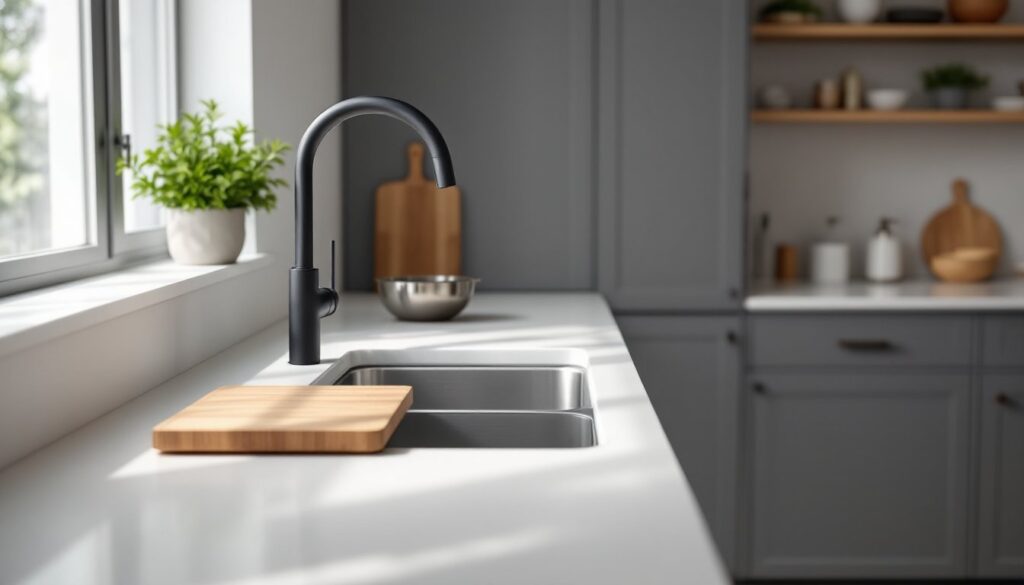
The kitchen sink might be the hardest-working element in your home, cycling through dozens of tasks daily, from rinsing produce to washing cast iron. But modern sink design has evolved far beyond basic utility. Today’s options combine advanced materials, smart engineering, and thoughtful aesthetics that align with contemporary kitchen workflows. Whether you’re planning a full remodel or upgrading a single fixture, understanding what makes a sink truly modern will help you choose hardware that performs as well as it looks. This guide walks through materials, configurations, features, and installation considerations to get you there.
Key Takeaways
- Modern kitchen sink design emphasizes clean lines, functional depth, and seamless integration with countertops, prioritizing minimalist profiles and neutral finishes that maximize utility while maintaining contemporary aesthetics.
- Stainless steel, composite (granite or quartz), and fireclay are the top materials for modern kitchen sinks, each offering distinct advantages in durability, maintenance, and heat resistance depending on your cooking style and water conditions.
- Single-basin and low-divider configurations dominate contemporary design, with workstation sinks adding expandable prep space through integrated ledges and sliding accessories that transform the sink into a functional work zone.
- Smart features like touchless faucets, filtered water taps, and UV sterilization compartments streamline kitchen workflows, though traditional manual overrides ensure reliability when technology isn’t necessary.
- Proper sizing (30–36 inches wide, 9–10 inches deep) and countertop compatibility determine installation success, with undermount sinks requiring solid-surface countertops and top-mount models suited for laminate.
- DIY sink installation is achievable with correct techniques—using manufacturer templates, 100% silicone sealant, and proper weight support—while common mistakes like skipping sealant or over-tightening clips can lead to leaks, cracks, and costly repairs.
What Defines Modern Kitchen Sink Design?
Modern sink design prioritizes clean lines, functional depth, and material honesty. You won’t find ornate apron detailing or decorative trim, instead, expect integrated drain boards, undermount installations, and flush or near-flush edges that simplify cleanup.
Key characteristics include:
- Minimalist profiles: Low-divider or no-divider basins that accommodate large cookware and baking sheets
- Seamless integration: Undermount or top-mount workstation models that sit flush with countertop surfaces
- Neutral finishes: Brushed or matte textures in stainless, graphite, or concrete-look composites
- Functional accessories: Built-in ledges for cutting boards, colanders, and drying racks that expand workspace
Modern doesn’t mean cold or industrial. Many contemporary designs incorporate warm metals like bronze or copper, especially in matte black or gunmetal finishes that resist fingerprints and water spots. The goal is to make the sink disappear visually while maximizing its utility during meal prep and cleanup.
Top Materials for Contemporary Kitchen Sinks
Material choice affects durability, maintenance, and how well the sink handles heat, scratches, and stains. Modern kitchens lean on a few proven performers.
Stainless Steel and Composite Options
Stainless steel remains the workhorse of modern kitchens. Look for 16- or 18-gauge thickness, lower gauge numbers mean thicker steel that resists denting and dampens noise. A brushed or satin finish hides minor scratches better than polished surfaces. Chromium-nickel ratios (often labeled 18/10) indicate corrosion resistance: higher nickel content performs better in hard-water areas.
Stainless works well if you’re installing an undermount configuration into laminate, quartz, or granite countertops. It tolerates boiling water, sharp knives, and acidic foods without staining. Downside: even sound-dampened models can be noisy without undercoating pads, and water spots show unless you wipe down after each use.
Composite (granite or quartz composite) sinks blend crushed stone with acrylic resins. They’re non-porous, resist scratches, and absorb sound better than metal. Composite handles heat up to about 535°F, so dropping a hot pan won’t crack the surface. Popular brands like Blanco and Kraus offer matte finishes in black, white, gray, and earth tones that coordinate with modern interior design trends.
Composite does require occasional resealing if the manufacturer recommends it, and lighter colors may show stains from coffee, wine, or tomato sauce if not wiped promptly. Use a mix of baking soda and water for routine cleaning: avoid abrasive pads that can dull the finish.
Fireclay is another modern contender, kiln-fired ceramic that’s dense, non-porous, and available in classic white or subtle pastels. Fireclay resists chips better than porcelain but can crack under extreme impact. It suits farmhouse-modern hybrids and pairs well with butcher-block or marble countertops.
Popular Sink Configurations and Layouts
Sink layout affects workflow as much as cabinetry does. Modern configurations prioritize flexibility and space efficiency.
Single-basin sinks dominate contemporary design. A large, uninterrupted basin (typically 30–36 inches wide and 9–10 inches deep) handles sheet pans, stockpots, and oversized cutting boards without fighting a center divider. If you rely on a dishwasher for most cleaning, a single basin gives you maximum flexibility.
Low-divider (60/40) basins split the sink unevenly, with a shallow divider (about 5 inches high) separating a larger work bowl from a smaller prep or rinse zone. This setup lets you soak dishes on one side while prepping vegetables on the other, and the low wall won’t block large items. It’s a practical middle ground for households that hand-wash frequently.
Workstation sinks integrate ledges, rails, or grooves that support accessories like cutting boards, colanders, and drying racks. Brands like Ruvati and Kraus design these systems so you can slide components along the basin edge, creating a mini prep station directly over the drain. Workstation models often include bottom grids to protect the sink floor and tiered racks for air-drying glassware.
Corner and island sinks are less common but suit open-plan layouts where the sink doubles as a social hub. Corner installations require careful cabinet planning to avoid dead space, and island sinks need dedicated venting for the drain line, consult local plumbing codes (typically IRC Chapter 30) before routing waste lines under a floor joist.
Many designers now showcase stunning kitchen sinks that integrate seamlessly into quartz waterfall islands or cantilevered counters, proving the sink can be a focal point rather than an afterthought.
Smart Features and Innovative Technology
Modern sinks increasingly incorporate tech features that streamline kitchen tasks.
Touchless faucets use infrared or capacitive sensors to start and stop water flow, reducing cross-contamination when handling raw meat or sticky dough. Most models include a manual override and run on batteries (four AA cells lasting 12–18 months) or low-voltage AC adapters. Moen and Delta offer reliable touchless options with pull-down spray heads and magnetic docking.
Integrated soap and sanitizer dispensers mount directly into the countertop or sink deck, eliminating plastic bottles on the rim. Look for models with 16–24 ounce reservoirs that refill from below, much cleaner than top-loading designs.
Built-in filtered water taps provide drinking water without a separate reverse-osmosis faucet. Systems like those from Kohler or Franke use under-sink cartridges (rated for 500–1,000 gallons depending on filter type) and include LED indicators when it’s time to replace media.
Garbage disposal integration is standard, but modern units run quieter (look for models rated at 60 decibels or lower) and include anti-jam features. A ¾ to 1 HP motor handles most food waste: anything higher is overkill for residential use. Match the disposal flange to your sink’s drain opening, most are 3.5 inches, but verify before purchasing.
Some high-end workstation sinks now include UV sterilization compartments for sponges and brushes, and LED task lighting mounted under the faucet neck for evening prep work. These features add cost but can justify themselves in busy kitchens.
Choosing the Right Size and Depth for Your Kitchen
Sink dimensions should match your cabinet size, countertop material, and how you cook.
Width: Measure the interior width of your base cabinet and subtract 3 inches to allow for mounting hardware and avoid stress on the cabinet frame. A 33-inch sink fits a standard 36-inch base cabinet: a 30-inch sink works in smaller spaces. If you’re replacing an existing sink, measure the cutout carefully, some undermount models require a larger opening than top-mount versions.
Depth: Modern sinks range from 8 to 12 inches deep. Deeper basins reduce splashing and hide dirty dishes, but they can strain your back if you’re shorter than average or spend long periods at the sink. A 9- to 10-inch depth balances ergonomics and capacity. If you wash large roasting pans or canning pots, go deeper: if you’re installing the sink in an island where kids will help, stay closer to 8 inches.
Bowl count: Single basins maximize usable space but require discipline to keep one side clear for rinsing. Double-basin sinks (50/50 or 60/40 splits) offer dedicated zones but limit what you can fit in each bowl. If you run a dishwasher daily, a single basin usually makes more sense. If you hand-wash most items or do a lot of soaking, a low-divider model provides flexibility.
Countertop compatibility: Undermount sinks require solid-surface countertops (granite, quartz, or solid-surface materials) because the cutout edge is exposed and must be sealed. Laminate countertops need top-mount (drop-in) sinks with a finished rim that covers the cut edge. Some modern farmhouse sinks include a flush-mount apron that sits even with cabinet faces, splitting the difference between traditional and contemporary aesthetics.
Installation Tips for DIY Homeowners
Sink replacement is a manageable DIY project if you’re comfortable with basic plumbing and have the right tools. Always wear safety glasses when cutting countertops or working under the sink, and use nitrile gloves when applying sealant.
For undermount sinks:
- Template and cut: Use the manufacturer’s template to mark the cutout on the underside of the countertop. A jigsaw with a down-cut blade minimizes chipping on quartz or granite. For laminate, you’ll need a top-mount model instead.
- Support and attach: Undermount sinks are heavy (stainless models weigh 15–25 pounds: composite can hit 30–40 pounds). Use sink clips or a two-part epoxy (some installers use both) to secure the basin to the underside of the counter. You’ll likely need a helper to hold the sink in place while you tighten clips.
- Seal the edge: Apply a bead of 100% silicone sealant (not latex or acrylic) around the rim where sink meets stone. Silicone remains flexible and waterproof: other sealants can crack or allow moisture infiltration.
For top-mount (drop-in) sinks:
- Check the cutout: If replacing an existing sink, compare old and new dimensions. Many modern sinks have slightly different profiles.
- Apply sealant: Run a continuous bead of silicone around the underside of the sink rim before dropping it into the cutout. This prevents water from seeping between the sink and countertop.
- Secure with clips: Most top-mount models include metal clips that attach to the underside of the countertop. Tighten evenly to avoid warping the rim or cracking laminate.
Plumbing connections: Modern drains often use push-fit or compression fittings rather than slip-joint nuts, making assembly faster. Match the P-trap diameter (usually 1.5 inches for kitchen sinks) to your drain line. If you’re adding a garbage disposal, the trap connects to the disposal outlet, not directly to the sink drain. For detailed advice on kitchen workflows and layout, resources like The Kitchn offer tested guidance from real home cooks.
Permits: Replacing a sink in the same location typically doesn’t require a permit, but if you’re relocating the sink or adding new drain lines, check with your local building department. Moving a sink more than 5 feet often triggers plumbing and electrical inspections, especially if you’re adding a dishwasher or disposal on a new circuit.
Common mistakes to avoid:
- Skipping the silicone bead (leads to leaks and mold)
- Over-tightening clips (can crack composite sinks or chip stone countertops)
- Failing to support the weight during undermount installation (sinks can drop and shatter)
- Ignoring the manufacturer’s installation instructions (voiding warranties)
If your countertop is already installed and you’re unsure about making a clean cutout, hire a countertop fabricator for that step. Most charge $100–$200 to template and cut, and the precision is worth it. You can still handle the plumbing and final mounting yourself.
Modern sinks are built to last 15–20 years with minimal maintenance, choose materials and features that match how you actually use your kitchen, not just what looks good in a showroom. Measure twice, cut once, and don’t skip the underlayment or sound-dampening pads if your model supports them. A well-chosen sink makes every kitchen task a little easier.