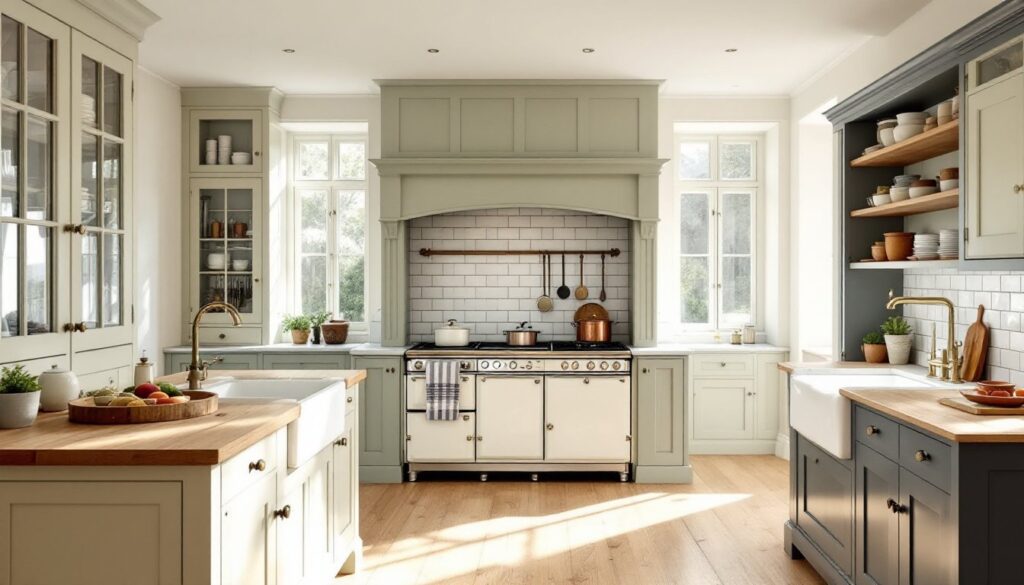
British kitchen design has endured for a reason, it balances formality with warmth, craftsmanship with practicality, and tradition with subtle innovation. Whether you’re planning a full remodel or updating cabinetry and finishes, understanding the principles behind this style helps you create a space that feels both rooted and livable. Unlike trend-driven approaches, British kitchens lean on architectural detail, quality materials, and restrained color palettes that age gracefully. This guide breaks down the defining elements, current trends, and actionable steps for bringing British kitchen design into your home, no matter where you live.
Key Takeaways
- British kitchen design balances formality with warmth by combining craftsmanship, quality materials, and restrained color palettes that age gracefully over time.
- Shaker-style cabinets painted in muted Farrow & Ball tones and paired with natural wood finishes form the foundation of traditional British kitchens with understated hardware.
- Modern British kitchen design trends for 2026 emphasize mixed materiality, sustainable reclaimed materials, integrated lighting, and secondary sculleries for better functionality.
- Recreating British kitchen design requires strategic planning of an unfitted layout with mixed cabinet heights, quality cabinetry construction, and period-appropriate appliances like farmhouse sinks and dual-fuel ranges.
- Color palettes for British kitchens whisper rather than shout, featuring sage green, charcoal, warm grays, and muted navy complemented by white subway tile backsplashes and honed stone countertops.
What Defines British Kitchen Design?
British kitchen design is rooted in a few core principles: symmetry, craftsmanship, and a blend of formal and functional spaces. Historically, British kitchens were working rooms, often below stairs in grand homes, but evolved into the heart of the household by the mid-20th century. That evolution left behind a reverence for solid construction, unfussy details, and materials that improve with age.
You’ll recognize a British kitchen by its reliance on cabinetry with in-set doors (not overlay), painted or stained wood finishes, and open shelving or glass-front upper cabinets displaying ceramics or everyday dishware. Unlike Scandinavian minimalism or modern industrial styles, British kitchens embrace layering: a dresser for china, a larder cabinet for dry goods, a farmhouse sink set into natural stone or butcher block.
Another hallmark is the integration of freestanding furniture pieces rather than a monolithic run of cabinets. A hutch, a prep table, or a standalone island introduces variety in height and depth, making the space feel less built-in and more collected over time. Materials lean heavily on natural wood, stone countertops (marble, soapstone, or slate), and ceramic tile, often in classic subway or encaustic patterns.
The layout itself tends toward the unfitted kitchen concept: individual units positioned around the room rather than a continuous wall of cabinetry. This approach requires careful planning and precise measuring, but it rewards you with flexibility and character that cookie-cutter layouts can’t match.
Key Elements of Traditional British Kitchens
Shaker Cabinets and Classic Cabinetry
Shaker-style cabinets are the backbone of traditional British kitchens. Named for the religious community that originated the design, Shaker doors feature a five-piece construction: four rails forming a flat frame around a recessed center panel. No bevels, no raised details, just clean lines and honest joinery.
In a British context, these cabinets are typically painted in muted tones, Farrow & Ball’s “Off-Black,” “Railings,” or softer shades like “Elephant’s Breath” and “Skimming Stone”, or left in natural hardwood with a hand-rubbed finish. The hardware is understated: cup pulls in aged brass, iron bin pulls, or simple knobs. Avoid oversized modern handles: they disrupt the proportions.
English kitchen cabinets often include bespoke details like plate racks, spice drawers with dividers, and pull-out larders. If you’re building or retrofitting, consider adding a floor-to-ceiling pantry cabinet with adjustable shelving. Use 3/4-inch plywood for cabinet boxes (not particleboard) and solid hardwood face frames for durability. In-set doors require precise hinging and a skilled hand, if you’re DIYing, practice on scrap or budget for a cabinet shop to handle door installation.
The AGA Range and Traditional Cooking Appliances
The AGA cast-iron range is the beating heart of a traditional British kitchen. Introduced in 1922, AGAs run continuously, radiating gentle heat and serving as both cooker and central gathering point. They’re available in two-, three-, or four-oven configurations, and modern versions offer electric or dual-fuel options alongside the classic oil or gas models.
Installing an AGA isn’t trivial. These ranges weigh upward of 500 pounds and require reinforced flooring (check joist spacing and load ratings per local building codes). You’ll also need dedicated electrical or gas lines and proper venting. Factor in clearances: AGAs radiate heat, so combustible materials must be at least 6 inches away from side panels. If an AGA is out of reach, financially or spatially, consider a high-end dual-fuel range from brands like Lacanche or Falcon, which capture the look without the always-on heat.
Other traditional appliances include Belfast or fireclay farmhouse sinks (typically 24 to 30 inches wide and front-apron style) and plate warmers or warming drawers integrated into cabinetry. Dishwashers and refrigerators are often panel-ready, hidden behind cabinetry fronts to maintain a cohesive, unfitted appearance.
Modern British Kitchen Design Trends for 2026
Contemporary British kitchens honor tradition but aren’t stuck in it. In 2026, expect to see mixed materiality: pairing painted cabinetry with natural oak or walnut islands, combining marble counters with soapstone or engineered quartz, and layering vintage brass faucets with matte black fixtures.
Sustainable and reclaimed materials are increasingly common. Salvaged floorboards, reclaimed brick for backsplashes, and FSC-certified hardwoods align with both environmental awareness and the British preference for patina and history. If sourcing reclaimed wood, allow for acclimation time (at least 72 hours in the installation environment) to prevent warping.
Another trend is the scullery or butler’s pantry, a secondary prep space tucked behind the main kitchen. This area houses small appliances, extra storage, and cleanup zones, keeping the primary kitchen uncluttered. If you’re planning a layout with a scullery, ensure at least 6 feet of clearance in walkways and consider a pocket door to save space.
Integrated lighting is more refined now: under-cabinet LED strips, pendants over islands in aged brass or oiled bronze, and discreet toe-kick lighting. Avoid overly bright, cool-white LEDs: opt for 2700K to 3000K color temperature to preserve the warmth inherent in British design.
Finally, storage solutions for small kitchens continue to evolve, with pull-out pantries, corner carousel units, and custom drawer inserts gaining ground. These details make even compact British-inspired kitchens highly functional without sacrificing style.
Color Palettes That Capture British Kitchen Style
British kitchens don’t shout, they whisper. Color palettes lean toward neutrals, earth tones, and deep, complex hues that shift with the light. Think sage green, charcoal, warm grays, muted navy, and creamy off-whites. These aren’t builder-grade neutrals: they’re layered, often with undertones of gray, green, or pink that add depth.
For cabinetry, popular choices include Farrow & Ball “Green Smoke,” “Down Pipe,” “Pavilion Gray,” and Benjamin Moore “Revere Pewter” or “Hale Navy.” Lower cabinets are sometimes painted in a darker shade, with upper cabinets or open shelving in a lighter tone, this two-tone approach adds visual interest without clashing.
Walls and backsplashes often feature white or cream subway tile (3×6-inch is standard), laid in a running bond or herringbone pattern. For a more decorative touch, consider encaustic cement tiles in muted geometric patterns. If tiling yourself, use a 1/16-inch grout joint for subway tile and a high-quality unsanded grout for tight lines. Seal grout with a penetrating sealer to resist staining.
Countertops in kitchens with British style typically use honed marble, soapstone, or butcher block. Polished marble shows every water spot and scratch, honed finishes are more forgiving. Soapstone darkens and develops patina over time: treat it monthly with mineral oil if you want an even, dark finish. Butcher block (usually 1.5 to 2 inches thick) requires regular oiling with food-safe mineral oil or a beeswax-mineral oil blend.
Accent colors come through in textiles, ceramics, and small painted details: a robin’s-egg blue on a hutch interior, terracotta pots on open shelves, or a vintage rug in faded reds and blues.
How to Recreate British Kitchen Design in Your Home
Recreating a British kitchen doesn’t require a complete gut job. Start with a realistic assessment of your space, budget, and skill level. If you’re planning structural changes, removing walls, relocating plumbing, or adding a scullery, check local codes and pull permits where required. Load-bearing walls need engineered headers: consult a structural engineer or licensed contractor before cutting into framing.
Step 1: Plan the Layout
Prioritize an unfitted look by mixing cabinet heights and depths. Instead of a continuous run of wall cabinets, combine open shelving, glass-front cabinets, and a standalone hutch or dresser. Leave at least 15 inches of counter space on either side of the cooktop and 24 inches beside the sink for prep.
Step 2: Choose Cabinetry
If building custom, use 3/4-inch hardwood plywood for boxes and solid wood face frames and doors. Shaker doors are beginner-friendly if you have a table saw and router: cut rails and stiles from 1×2 or 1×3 nominal stock (actual 3/4×1.5 or 3/4×2.5 inches), and use a 1/4-inch dado for the center panel. Assemble with wood glue and pocket screws, then sand and paint with a high-quality acrylic-alkyd hybrid paint (like Benjamin Moore Advance) for a durable, smooth finish.
If purchasing ready-to-assemble or semi-custom cabinets, look for in-set or beaded in-set door styles. IKEA’s BODBYN line offers a Shaker-adjacent look at a fraction of custom costs, though you’ll sacrifice some authenticity in construction.
Step 3: Select Appliances and Fixtures
Unless you’re committed to the AGA experience, a dual-fuel or all-gas range (30 to 36 inches wide) anchors the cooking zone. Panel-ready dishwashers and refrigerators maintain the unfitted aesthetic. For sinks, a single-bowl fireclay farmhouse sink (30 inches is standard for a 36-inch base cabinet) pairs well with a bridge-style faucet in unlacquered brass or polished nickel. Unlacquered brass tarnishes and develops patina, if that’s not your style, opt for a living finish in aged brass or oil-rubbed bronze.
Step 4: Finish with Details
Install open shelving using solid wood brackets or cast-iron shelf supports. Shelves should be at least 1.5 inches thick (glue up two layers of 3/4-inch hardwood if needed). Display everyday dishes, glassware, or ceramics, not decorative clutter.
Add a plate rack above the sink or in a drying cabinet. You can build one with 3/4-inch dowels spaced 1.25 inches apart, set into routed grooves in the cabinet sides.
For flooring, British country kitchen ideas often feature wide-plank hardwood, reclaimed brick, or natural stone tile. If installing hardwood, use 3/4-inch solid or engineered planks at least 5 inches wide. Acclimate wood for a minimum of 72 hours, and leave a 1/2-inch expansion gap at walls.
Step 5: Paint and Seal
Prime all wood surfaces with a stain-blocking primer (especially if painting over oak or other open-grain woods). Apply two coats of paint, sanding lightly with 220-grit sandpaper between coats. Seal countertops, grout, and any porous surfaces per manufacturer instructions. Butcher block requires multiple coats of mineral oil or a food-safe varnish.
Safety and Permits
Wear safety glasses, gloves, and a dust mask when cutting, sanding, or painting. If rewiring for new appliances, hire a licensed electrician or pull permits and follow NEC guidelines. Gas line work always requires a professional. Don’t skip permits, failed inspections delay projects and can complicate resale.
British kitchen design rewards patience and attention to detail, but the result is a space that feels timeless, lived-in, and genuinely yours.